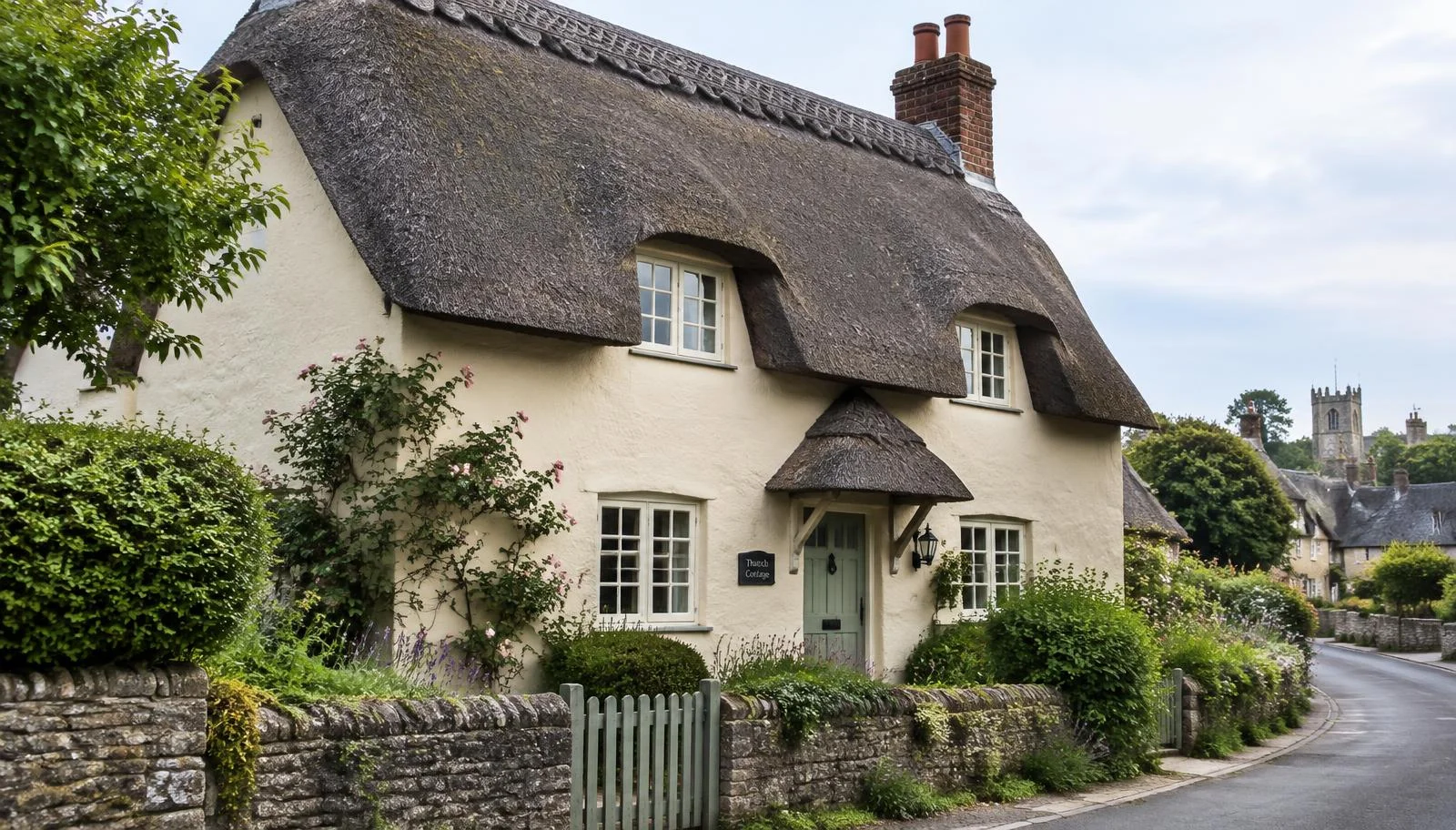
Some lenders expressly accept thatched roofs. Virgin Money, for example, currently includes a main pitched thatched roof within its general standard-construction criteria, subject to individual assessment. Bank of Ireland also accepts pitched thatched roofs, although its criteria specifically require specialist insurance cover.
The important question is therefore not simply “Is the roof thatched?”
It is: what condition is the roof in, what is the rest of the property constructed from, is suitable insurance available, and does the lender’s valuer consider the property satisfactory security?
If the construction or valuation has already created a mortgage problem, FG & Cook’s specialist lending service covers unusual properties and property-related lending difficulties. Its directors also include RICS-qualified surveyors.
Can you get a normal mortgage on a thatched house?
Yes, potentially. Thatched property is not confined to a single specialist-lender market.
Virgin Money’s current residential criteria say a property can generally be acceptable where it has conventional walls and a main pitched roof covered in tiles, slate, thatch or certain other accepted materials. The property remains subject to individual assessment.
Bank of Ireland for Intermediaries also currently states that it accepts pitched roofs covered with thatch, slate or standard/artificial tiles, although it requires specialist insurance cover for the thatched roof.
These are examples, not a promise that every thatched property fits every lender.
The age, construction, condition, location and value of the house may still matter, as can the roof itself.
A thatched roof therefore changes the questions the lender asks rather than automatically ending the application.
A quick way to understand the main issues
| Property / roof situation | What may matter most | Useful evidence or next step |
|---|---|---|
| Thatched roof over conventional masonry walls | Roof condition, insurance, value and marketability | Lender valuation plus suitable buildings insurance |
| Thatched period property with cob or other traditional walls | Whole-building construction and condition, not just the roof | Lender-specific assessment and an appropriate buyer survey |
| Deep historic layers of accumulated thatch | Condition of thatch and possible additional loading on supporting timbers | Experienced thatcher and, where justified, further structural advice |
| Thatched property with an active solid-fuel stove | Chimney condition, fire precautions and insurer terms | Check chimney/flue condition and the actual insurer’s requirements |
The table is a practical guide, not a statement that every lender or insurer follows the same process.
Is a thatched roof classed as non-standard construction?
There is no useful market-wide answer to that question.
Some insurers may regard thatch as non-standard for insurance purposes. Mortgage discussions also sometimes use “non-standard” loosely for anything outside a tiled or slated roof.
But lender definitions differ.
Virgin Money’s current criteria are a useful example because they include a pitched thatched roof within their general standard-construction wording.
So it would be misleading to tell a buyer: “thatched roof = non-standard construction = specialist mortgage”.
The underlying walls may also be brick, stone, cob or timber frame, and that wider construction can affect the lending decision independently of the roof covering.
A period cob cottage with thatch is a particularly good example. Bank of Ireland says period cob properties may be considered where the roof is thatched, depending on the mortgage valuer’s comments.
The whole property needs to be assessed, not one material in isolation.
Why does the condition of the thatch matter?
A roof can be mortgageable in principle and still need expensive work.
Thatch does not fail according to a universal calendar.
Its condition and remaining life can depend on factors including:
- the thatching material and method;
- workmanship;
- roof pitch;
- exposure to weather;
- orientation;
- overhanging trees and restricted airflow;
- maintenance history;
- the condition of ridges and details;
- previous coats of thatch.
Historic England notes that ridges, gables and chimney abutments commonly show wear first, and that traditional straw thatch can be repaired locally rather than every defect requiring complete renewal.
A roof requiring local repairs or reridging is not automatically in the same condition as one requiring substantial overcoating or complete rethatching.
Historic England also warns that repeated layers can eventually make a thatched roof too deep and heavy for its supporting timbers.
So the buyer needs to consider both the visible thatch and the roof structure supporting it.
Does a lender need a specialist thatch report?
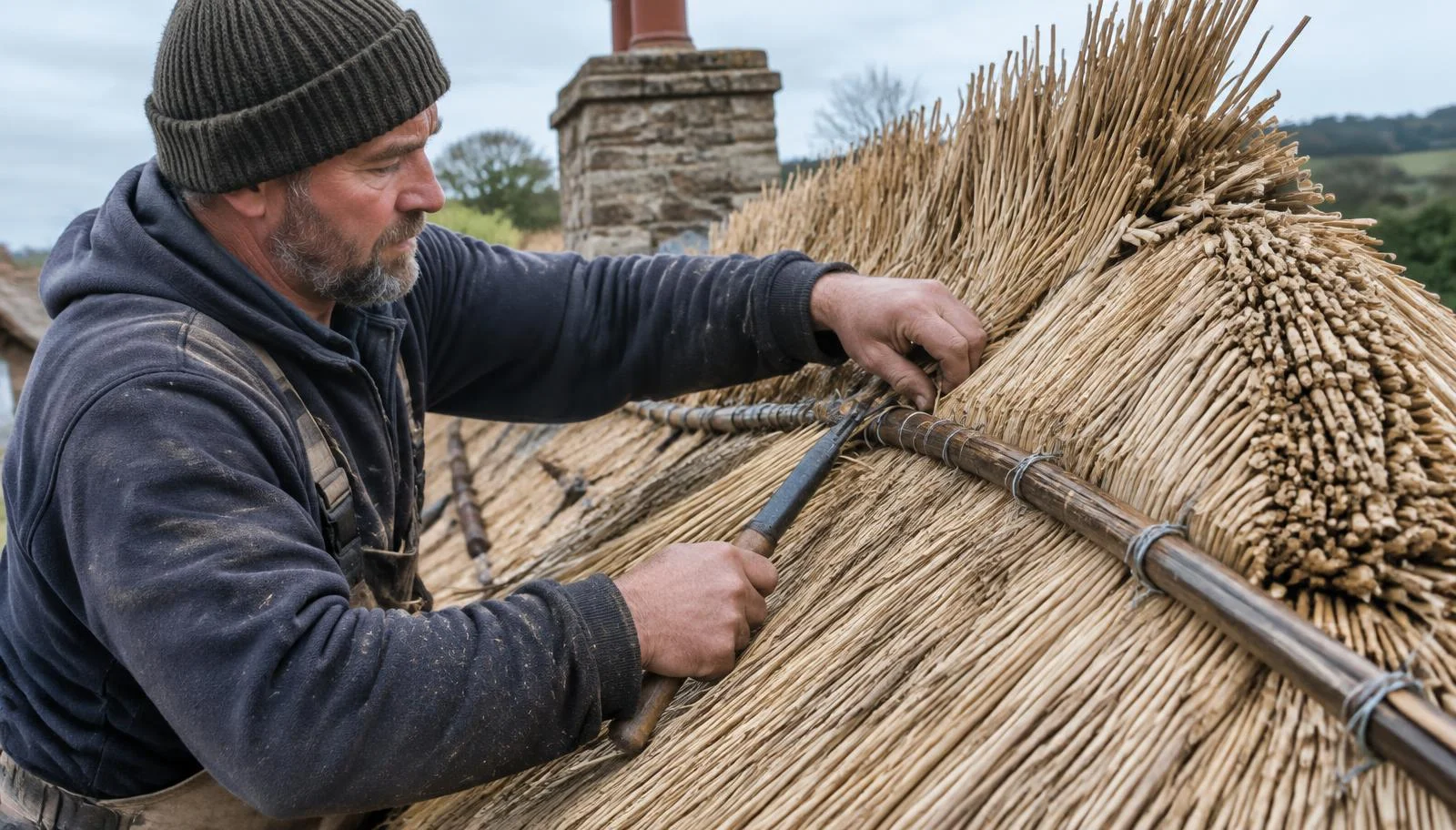
Not automatically.
A well-maintained thatched property may be acceptable following the lender’s normal valuation process.
If the valuer is uncertain about the condition or remaining serviceability of the roof, further advice could become appropriate.
That might mean information from an experienced thatcher rather than a structural engineer, because the question could simply be whether the existing thatch needs local repair, reridging, overcoating or more extensive renewal.
If there are concerns about the supporting roof structure as well, a different professional may be needed.
The important point is to investigate the question that actually needs answering.
A buyer should not commission an expensive collection of reports just because the estate-agent particulars contain the word “thatched”.
Why is buildings insurance so important?
Buildings insurance matters on most mortgaged homes, but with thatch it deserves attention early.
Mortgage borrowers are normally expected to maintain buildings insurance, and some lenders make the additional thatch requirement particularly explicit.
Bank of Ireland’s current mortgage criteria accept pitched thatched roofs but state that specialist insurance cover must be in place.
That does not mean every lender uses the same wording, or that only one type of specialist policy is acceptable.
It means you should not wait until the day before exchange to find out whether you can insure the house on acceptable terms.
Thatch can require more specialised underwriting because the cost and method of repair after a serious loss may differ from a conventional tiled roof.
Do not compare premiums alone. Check the cover offered, rebuild assumptions, excesses, exclusions and any requirements concerning chimneys, solid-fuel appliances, roof maintenance or inspection. Those conditions vary between insurers, so rely on the actual policy wording rather than generic rules found online.
And remember the distinction: an insurer agreeing to cover the house does not mean the thatch is in good condition.
What about fire risk and chimneys?
Fire risk is one reason insurance and property condition receive additional attention, but it needs to be discussed proportionately.
A thatched house is not automatically unsafe.
Historic England has published detailed guidance following research into fires involving thatched properties and wood-burning or multi-fuel stoves.
Its research found that fires could be started by high-energy sparks and embers ejected from chimneys, and by hot flue gases escaping through defects in chimney stacks into the thatch. Historic England’s fundamental recommendation is that wood-burning and multi-fuel stoves should not be used in thatched buildings.
That is professional guidance, not a statement that owning or using such a stove is universally illegal.
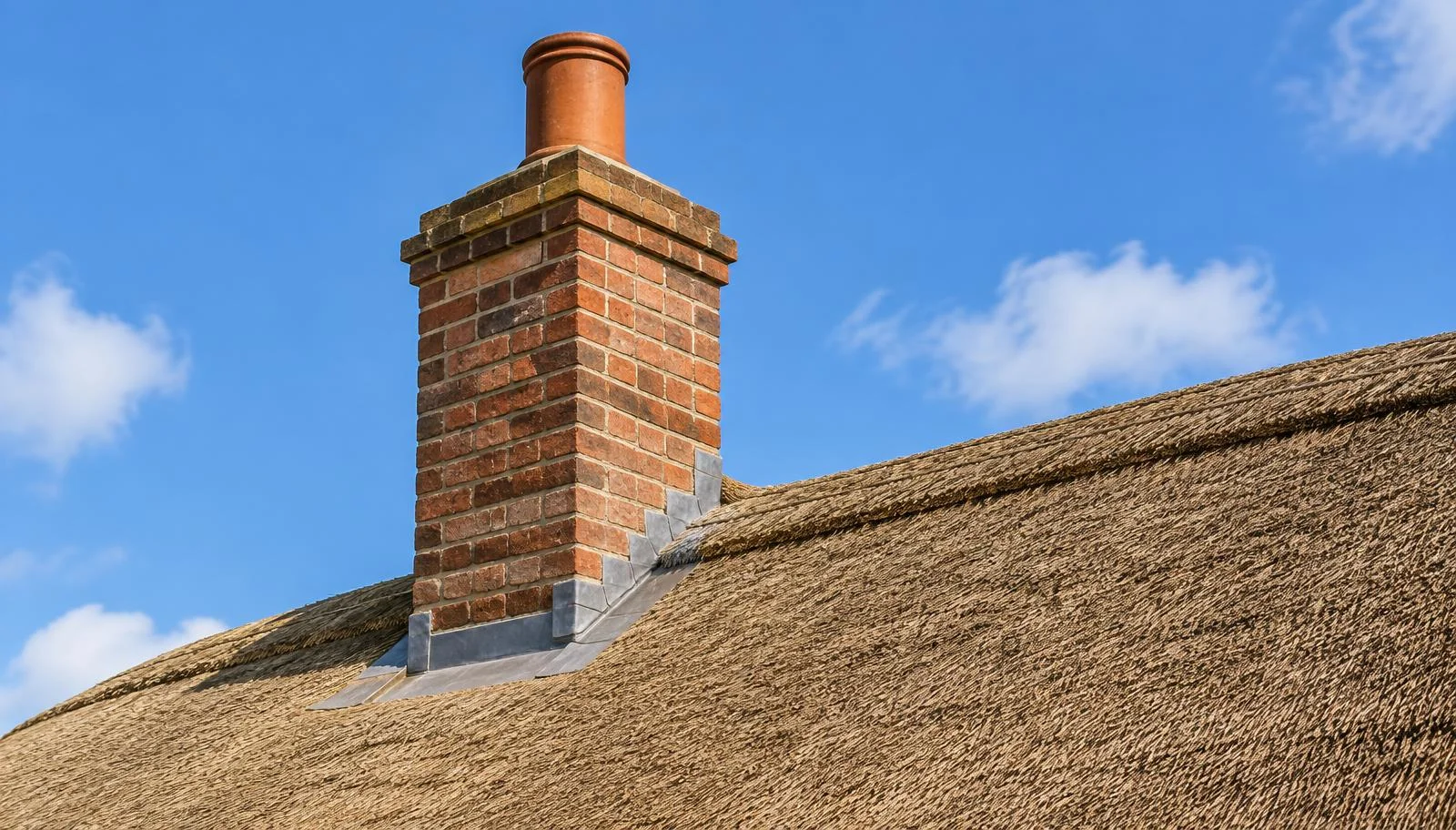
Where one is present, the practical issue is to establish the condition and configuration of the chimney and flue, whether maintenance has been adequate, and what the proposed insurer requires.
Historic England also warns that devices commonly called spark arrestors should not simply be assumed to remove the risk; its research found that they could have little or no impact on spark mitigation and might encourage emitted sparks to remain close to the thatch.
For a buyer, the objective is not to become a fire-safety specialist before purchasing. It is to identify anything that needs proper investigation and make sure the insurance position reflects the actual property.
What happens during the mortgage valuation?
The mortgage valuation remains primarily an assessment for the lender.
It does not become a detailed thatch survey simply because the property has a traditional roof.
The valuer will consider whether the property is suitable security and sufficiently saleable, and may comment where the condition of the roof materially affects the valuation.
But inspection limitations still apply.
A basic lender valuation may assess a pitched roof covering from limited viewpoints, sometimes from ground level, and does not inspect every concealed layer or roof timber.
This is particularly important with a thatched building.
A satisfactory mortgage valuation does not confirm:
- the remaining life of the thatch;
- the condition of every layer;
- the condition of all concealed roof timbers;
- the integrity of hidden chimney masonry;
- whether future rethatching will be inexpensive.
A lender accepting thatch under its policy is therefore not the same thing as somebody having opened up the roof and confirmed that the hidden layers and structural timbers are defect-free.
Lender acceptance and buyer due diligence are different things.
What survey should you consider?
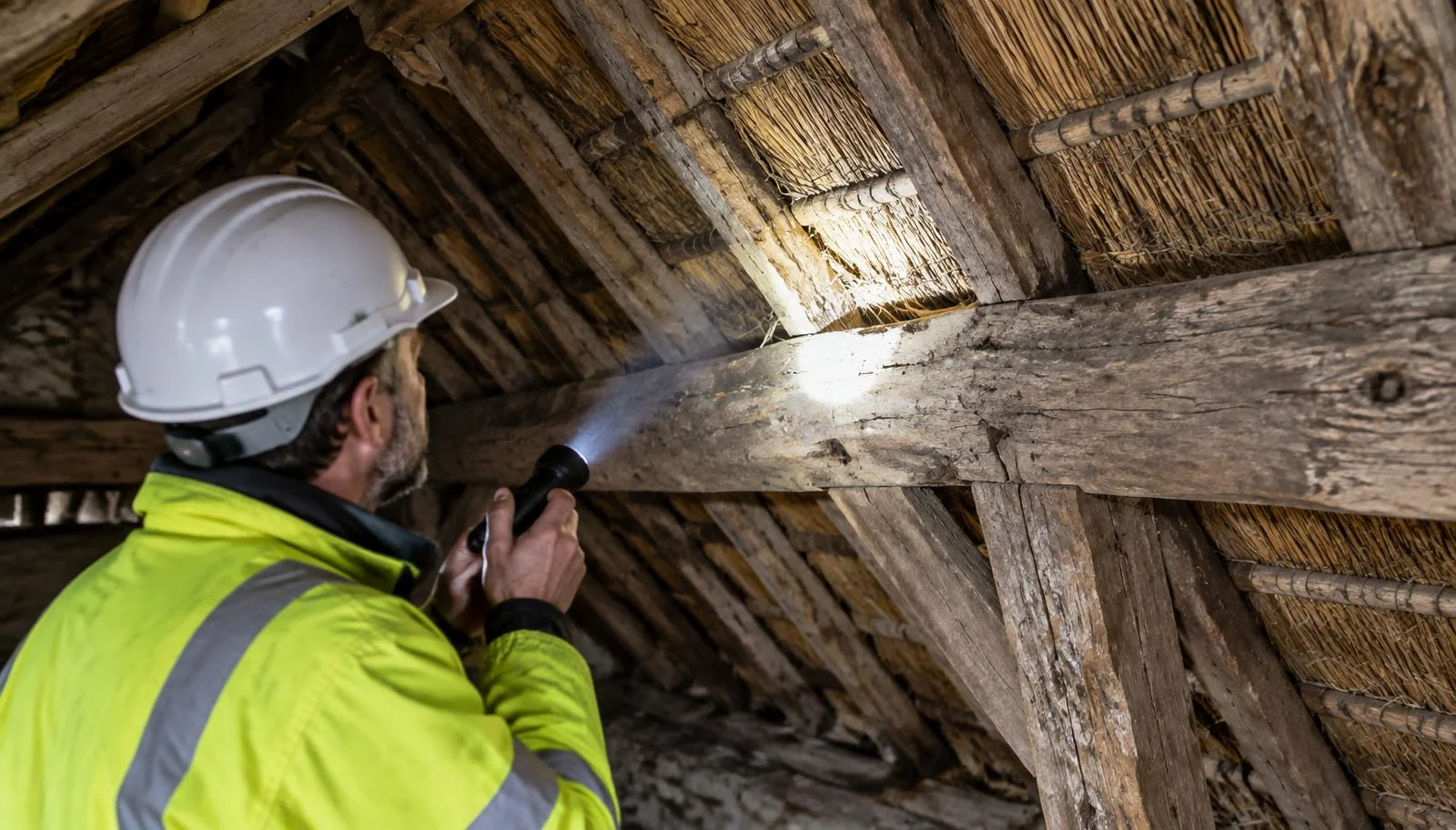
RICS specifically identifies a thatched roof as one of the circumstances in which a buyer may particularly benefit from obtaining a survey.
Its Level 2 Home Survey is generally intended for conventional properties built from common materials and in reasonable condition.
The Level 3 service provides a more extensive assessment and is intended for older, unusual, altered or more complex buildings.
Many thatched homes are older and have other traditional construction features, so a Level 3 survey may be particularly useful.
That does not mean every property with a piece of thatch automatically requires Level 3.
The right survey depends on the age, construction, condition, complexity and proposed works.
And an RICS survey does not replace specialist thatching advice where a precise assessment of the roof covering itself is required.
What if the property is listed?
This matters because a large number of traditional thatched houses are also heritage buildings, although thatched does not automatically mean listed.
Listed status can affect what can be changed and how repairs are carried out.
GOV.UK guidance states that works altering a listed building in a way that affects its special architectural or historic character require Listed Building Consent.
That does not mean every small repair to thatch requires an application.
Like-for-like maintenance and limited repair can be very different from stripping historic fabric, changing the roof profile, changing the method of thatching or substituting a materially different covering.
Historic England advises owners needing thatch repairs to check with the local planning authority because local policies may influence which types of thatch and working methods are considered appropriate in that region, particularly for listed buildings.
That can have practical consequences for the specification and availability of suitable contractors, but it should not be assumed that a particular authority will prohibit one material, require another, or impose a particular cost premium without checking the actual building and local policy.
The solicitor should therefore verify listed status and any relevant consents or restrictions before exchange.
What if the property has recently been rethatched?
A newly worked-on roof can be reassuring, but the phrase “recently rethatched” deserves the same scrutiny as “new roof” on any other property.
Ask what was actually done.
Was the ridge renewed?
Was the roof locally repaired?
Was a new coat applied?
Was old thatch stripped?
Was the whole roof renewed?
Was work also needed to the roof timbers or chimney?
Where substantial work has been undertaken, useful evidence might include the thatcher’s invoice, specification, photographs and any relevant consent or approval documentation.
If the building is listed, establish whether the work was straightforward maintenance or whether consent was required and obtained.
Do not assume that a contractor’s guarantee proves the work is acceptable to every insurer, lender or future purchaser.
Equally, the absence of a long written guarantee does not by itself prove that traditional thatching work was defective.
The quality and scope of the work matter more than the marketing language around it.
Does thatch affect resale and remortgaging?
It can, but not necessarily because lenders dislike thatch.
Some mainstream lenders expressly accept it.
The more significant issue may be that a thatched house attracts a narrower group of buyers than a conventional modern property and carries different maintenance and insurance considerations.
The lender is interested in whether the property remains sufficiently marketable if it ever needs to be sold.
Your own future buyer may also need to satisfy the lending and insurance criteria that exist at that time.
This is particularly relevant where the thatched roof is combined with another unusual feature such as cob walls, timber framing, listed status, substantial land or an unusual rural location.
So do not reduce the decision to “Can I get a mortgage today?”
Also ask whether the price properly reflects the maintenance, insurance and resale characteristics of the property you are buying.
What should you check before exchange?
Start by separating the mortgage question from the roof-condition question.
Establish:
1. whether your chosen lender accepts thatched roofs;
2. whether the mortgage valuation has raised any condition issue;
3. whether the thatch needs repair, reridging, overcoating or substantial renewal;
4. whether the supporting roof structure has any material defects;
5. whether a wood-burning or multi-fuel stove is installed;
6. whether the chimney and flue arrangements require further investigation;
7. whether acceptable buildings insurance is available;
8. whether the property is listed or subject to relevant heritage restrictions;
9. whether recent thatching work has appropriate supporting documentation;
10. whether the likely maintenance costs still make the agreed purchase price sensible.
Do not rely solely on the seller saying “the thatch has years left in it”.
Equally, do not assume that because a survey contains a warning about thatch the mortgage lender will automatically decline the property.
You need the lender’s actual response and an independent understanding of what you are buying.
Insurance should be investigated before exchange rather than assuming that a policy can be obtained afterwards.
For a first-time buyer, the unfamiliar maintenance and insurance arrangements can make an already complicated purchase harder to assess. FG & Cook’s first-time buyer mortgage service explains the wider purchase process.
If the property combines thatch with another unusual construction type, our broader non-standard construction mortgage guide explains why identifying the full building system rather than one material can matter.
How can FG & Cook help?
Thatched properties are a good example of why the words “specialist property” can hide several different questions.
The useful question is not simply “Which lenders accept thatch?”
It is: what is the property actually constructed from, what condition is the thatch in, is suitable insurance available, has the valuer raised concerns and which lenders currently accept the complete risk?
FG & Cook routinely helps with property-related mortgage problems, including unusual and non-standard construction, and its directors include RICS-qualified surveyors.
That does not replace a lender’s valuer, your own surveyor, an experienced thatcher, insurance specialist, chimney professional or solicitor where their expertise is needed.
It does mean the building information can be considered alongside lender criteria rather than assuming that “thatched cottage” automatically means a particular mortgage route.
You can explore our specialist lending service, review our wider mortgage services or speak with FG & Cook about the property you are considering.
FG & Cook Financial Services Limited is an appointed representative of OSL Financial Services Limited, which is authorised and regulated by the Financial Conduct Authority under FRN 948512.
Your home may be repossessed if you do not keep up repayments on your mortgage.
This article is intended for general information only and does not constitute personalised mortgage, valuation, surveying, thatching, insurance, fire-safety, heritage or legal advice. Lender and insurer criteria can change.