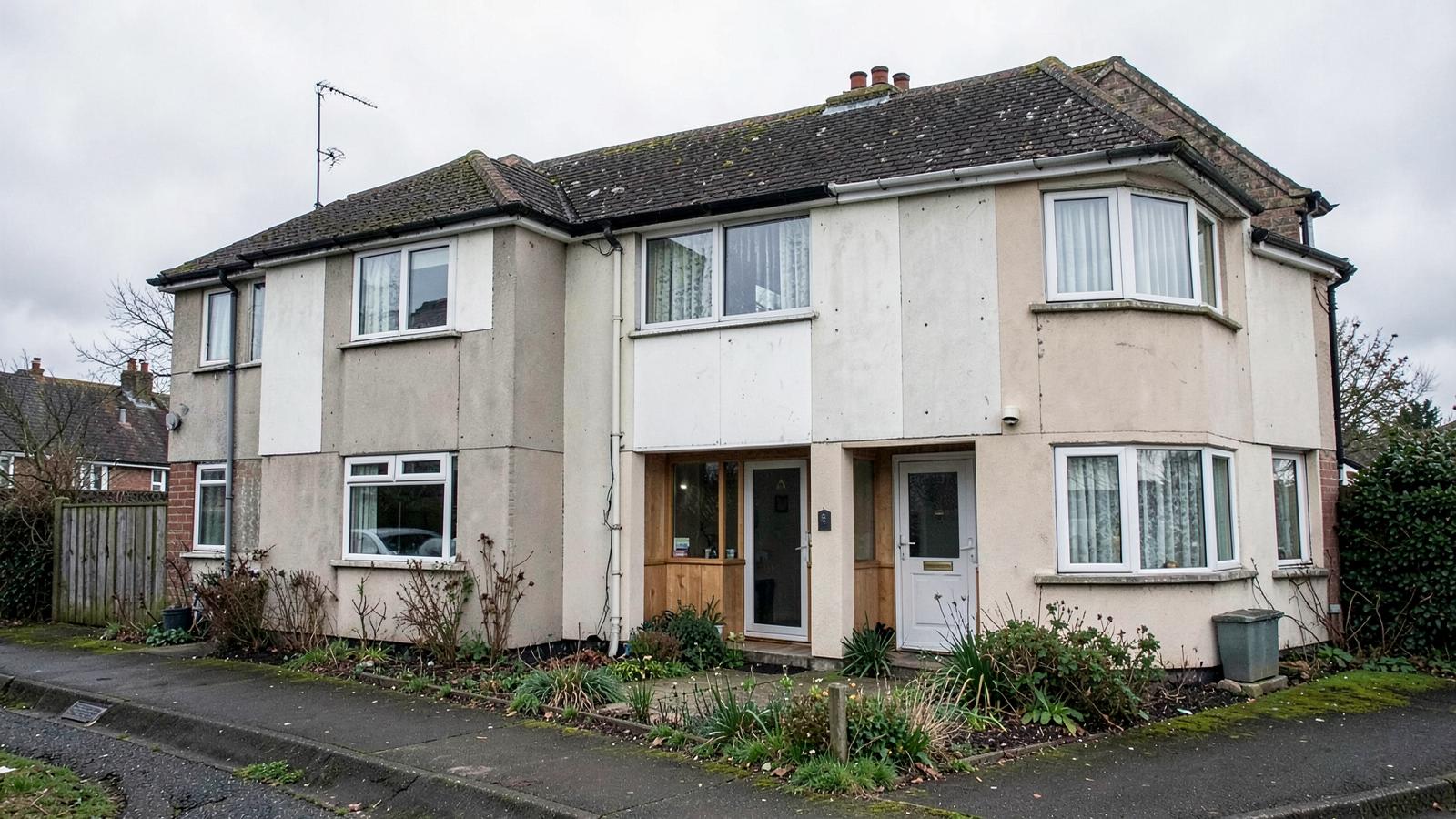
Yes, it is possible to get a mortgage on many non-standard construction properties. However, your choice of lender may be narrower, and the property will usually receive closer scrutiny during the valuation.
The phrase “non-standard construction” covers an enormous range of homes. A well-maintained modern timber-frame house with an acceptable warranty presents a very different lending risk from an unrepaired post-war concrete property, even though both might be described as non-standard.
The most important first step is therefore to identify exactly how the property was built. “Concrete construction” or “prefabricated house” is rarely enough information for a lender to make a meaningful decision.
FG & Cook combines specialist mortgage advice with in-house RICS surveying expertise. This allows us to consider both parts of the problem: which lenders may accept the construction and whether the property's condition, documentation and future saleability are likely to support the mortgage.
What is a non-standard construction property?
Most UK lenders regard a conventionally built home as one constructed using familiar materials and methods, typically brick or block walls beneath a tiled or slate roof.
A property may be described as non-standard where its main structure, external walls or roof use a less conventional system or material.
The table below gives broad examples only. It is not a lender-acceptance list, because decisions depend on the exact system, age, condition, documentation and valuation.
| Broad construction type | Examples | What a lender may want to understand |
|---|---|---|
| Precast reinforced concrete (PRC) | Airey, Cornish, Wates and other named post-war systems | Whether the system was designated defective, whether repairs were completed and whether acceptable certification exists |
| Mass concrete | Wimpey No-Fines, Laing Easi-Form and similar systems | The precise system, condition, local resale evidence and valuer's view |
| Steel frame | BISF and other steel-framed systems | Frame condition, corrosion risk, cladding, alterations and saleability |
| Timber frame | Modern timber frame, older timber buildings and exposed-frame systems | Age, design, external cladding, warranty, condition and lender policy |
| MMC or modular | Factory-made panels, pods, frames and volumetric systems | Accreditation, warranty, durability, replacement components and resale evidence |
| Traditional but unusual | Cob, wattle and daub, thatch or converted buildings | Condition, maintenance, insurance, local demand and survey evidence |
A particular material does not automatically make a property unmortgageable.
Some lenders accept cob, thatch, modern timber frames and various forms of Modern Methods of Construction within their ordinary lending criteria. Others assess them individually or impose restrictions.
The construction's age, design, condition and local market can matter as much as the broad material description.
Which construction types can cause mortgage difficulties?
Post-war concrete and prefabricated housing often causes the greatest concern.
Large numbers of homes were built rapidly following the Second World War using systems designed to address housing shortages. Some have performed well, while others subsequently developed structural problems.
Certain precast reinforced concrete systems were formally designated as defective under housing legislation. Examples found across the UK include Airey, Cornish, Wates and other named systems. These properties may be unacceptable to many mainstream lenders unless they have been repaired under an acceptable scheme and the correct certification is available.
Not every concrete system falls into the same category. Wimpey No-Fines and Laing Easi-Form, for example, are mass-concrete systems rather than a universal shorthand for defective PRC housing. A lender will still want the precise system identified and will make its own decision.
Steel-framed homes can also present difficulties where corrosion has affected the frame or where the structure is concealed and difficult to assess.
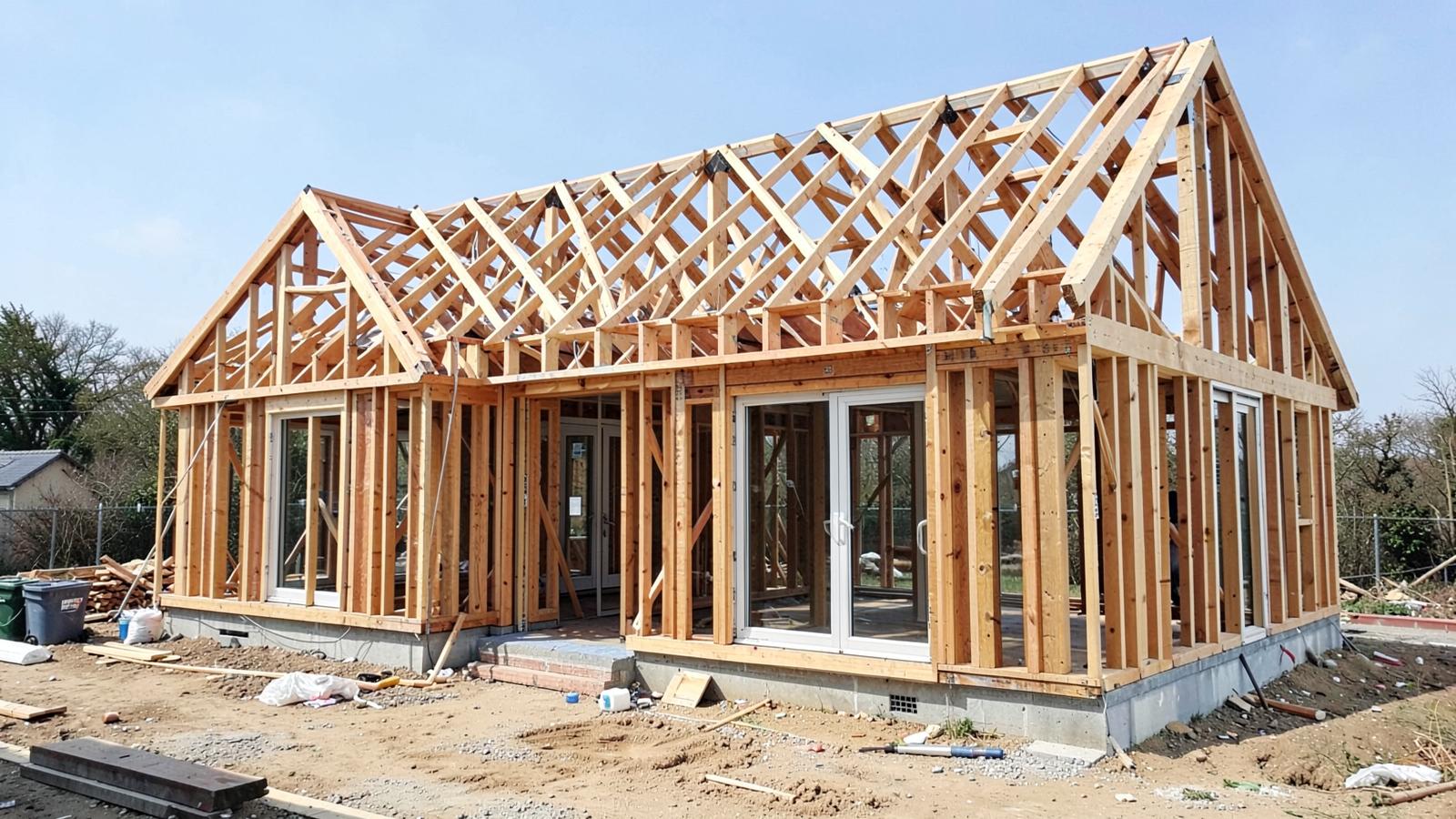
Timber construction needs more careful explanation. A modern timber-frame home with conventional outer walls may be acceptable to a wide range of lenders. A much older timber building, an unusual exposed frame or a system with limited evidence of durability may receive a very different response.
Modern modular properties create another distinction. “Modern Methods of Construction” is not one building type. It describes a broad range of factory-made panels, pods, frames and components. Some systems are well established and supported by suitable warranties. Others have a limited resale history or use components that may be difficult to replace in future.
This is why a lender cannot reliably assess a property from the label “non-standard” alone.
Why are mortgage lenders more cautious?
A lender is not only assessing whether you can afford the mortgage. It must also decide whether the property provides suitable security for the loan.
If the mortgage is not repaid, the lender may eventually need to sell the property. It will therefore be concerned about anything that could affect the home's value or reduce the number of future buyers.
The main concerns usually include:
- Structural durability
- The likelihood and cost of future repairs
- Availability of specialist contractors
- Whether replacement components remain obtainable
- Buildings-insurance availability
- The quality of any previous repairs
- Mortgage availability for a future buyer
- The strength of the local resale market
- Whether the construction is readily identifiable
- Whether the valuer can establish reliable comparable evidence
A structurally sound property can still be unacceptable to a particular lender if it believes the future resale market is too limited.
Equally, one lender declining the construction does not prove that every lender will reach the same decision.
What will the lender and valuer assess?
The mortgage valuer will normally consider three broad questions.
Is the property structurally suitable?
The valuer may be able to reach a view from the inspection and available information. In more complex cases, the lender may request a structural engineer's report, timber assessment, repair certificate or another specialist investigation.
The mortgage valuation is primarily for the lender and is not a substitute for a detailed survey commissioned for your benefit.
An unusual, altered or older building may justify a more detailed RICS Home Survey or Building Survey because its condition and future maintenance requirements can be more complex than those of a conventional modern home.
FG & Cook does not currently publish a separate surveying-service page on this website, so readers can learn more about the firm's RICS-qualified surveying expertise on the About page.
Is there a reliable market for the property?
The valuer will consider whether comparable properties sell regularly in the area.
A non-standard home may be relatively straightforward to value where there are many similar properties nearby and an established record of mortgage-backed sales.
A one-off experimental building in an area dominated by conventional homes may be harder to assess, even if it appears to be in good condition.
Would another buyer be able to mortgage it?
Future mortgageability is central to saleability.
A property may suit you perfectly, but the lender must consider the size of the wider market. If only cash buyers or a very small number of specialist lenders are likely to accept it, that can affect both value and lending appetite.
This point is easily overlooked. Obtaining a mortgage today is only part of the decision. You also need to consider what may happen when you remortgage or eventually sell.
Why is the exact construction system so important?
Describing a house as “concrete” is similar to describing a car as “metal”. It does not provide enough detail.
Different named construction systems can have completely different lender outcomes. Even systems with similar names may be treated differently depending on the version and year of construction.
For example, a lender may distinguish between several variants produced by the same original manufacturer. Another may accept houses built using a particular system but decline flats built in the same way.
Before approaching lenders, try to establish:
- The precise construction-system name
- The approximate build date
- Whether the house or the whole development uses that system
- Whether it has been designated defective
- Whether structural repairs have been completed
- Who carried out the repairs
- Whether an acceptable repair certificate exists
- Whether the property has been altered or extended
- What warranty or accreditation applies
- Whether suitable buildings insurance is available
This is one of the clearest examples of why selecting a lender before understanding the property can waste time and money.
A lender that is competitive for your income and deposit may be completely unsuitable for the building.

How can you find out whether a property is non-standard construction?
The estate agent's particulars may mention the construction, but they are not always technically precise.
Useful sources can include:
- The seller's previous survey
- The title documents and conveyancing papers
- Local-authority or housing-association records
- Planning and Building Regulations records
- Warranty documents
- Repair certificates
- Previous structural reports
- The Energy Performance Certificate, although this may not identify the full structural system
- A survey by a suitably experienced chartered surveyor
Visual appearance can be misleading. Brick outer walls do not necessarily prove that the original concrete or steel frame has been removed.
Where the system cannot be identified confidently, further investigation may be needed before choosing a lender.
What should you check before applying?
Ask for the construction documents
The seller, estate agent, housing association, local authority or previous survey paperwork may contain useful information.
Request any available:
- Structural reports
- Repair certificates
- Guarantees
- Building warranties
- Planning and Building Regulations documents
- Details of extensions or alterations
- Previous survey reports that the seller is willing to provide
- Insurance documents
- Construction-system information
Do not assume the estate agent's description is technically precise.
Check whether the property can be insured
Buildings insurance is normally required from exchange of contracts or completion, depending on the transaction and jurisdiction.
Obtain an insurance indication early and disclose the construction accurately. A generic online quote based on selecting “brick” from a drop-down menu is of little value if the home is actually steel framed or PRC.
Difficulty obtaining suitable insurance can also indicate a wider problem that the lender may take seriously.
Ask a broker to check the construction before submitting an application
A specialist mortgage adviser can compare the identified construction against current lender criteria.
This does not guarantee acceptance. The final decision may still depend on the valuation and underwriting.
However, an informed pre-application check is far better than applying to a lender simply because it offers the lowest advertised rate.
Each unsuitable application can create cost, delay and additional uncertainty for the transaction.
Commission the right level of survey
A mortgage valuation is not a detailed assessment of the property for you.
For an unusual building, the surveyor needs sufficient knowledge of the particular construction and its typical defects. A standard inspection may recommend further specialist investigation where parts of the structure cannot be assessed visually.
Where significant work is recommended, obtain properly scoped quotations rather than relying on broad estimates.
Can repaired concrete properties be mortgaged?
Some can.
A property constructed using a defective PRC system may become acceptable to certain lenders if it has been repaired under a recognised scheme and supported by documentation acceptable to the lender and valuer.
The detail is critical.
A lender may want confirmation that:
- The whole required repair was completed
- The work followed an acceptable repair specification
- The certificate covers the actual property
- The work and certification were completed by appropriately qualified parties
- No unapproved alterations have compromised the repair
- The valuer considers the property structurally sound and saleable
The absence of a certificate can be a major obstacle even where the property appears to have been repaired.
Some lenders may consider retrospective certification in limited circumstances. Others will not, and certain building types or flats may remain unacceptable regardless of repair.
Do not commit to the purchase on the assumption that visible brickwork means the original concrete system has been properly removed or repaired.
What can happen at the mortgage valuation?
There are several possible outcomes.
The lender may accept the property without additional requirements.
It may ask for further information before making a decision. This could include a structural report, repair documentation, warranty details or confirmation of the exact building system.
The lender may reduce the valuation if the construction affects demand or future saleability.
It may offer the mortgage subject to specific conditions or a retention until necessary work has been completed.
It may also decline the property entirely, even if your income, deposit and credit history are otherwise acceptable.
If a property is declined, establish the precise reason before applying elsewhere. A lender-policy issue may be solved by approaching a more suitable provider. A serious structural or marketability problem may follow the property to the next valuation.
Will you need a larger deposit or pay a higher rate?
Possibly, but not always.
Some mainstream lenders accept particular non-standard construction types on ordinary products, subject to valuation.
Where fewer lenders are willing to consider the property, your product choice may reduce. A specialist lender may apply:
- A lower maximum loan-to-value
- A larger minimum deposit
- A higher interest rate
- Additional valuation requirements
- Specialist-report conditions
- Higher arrangement or valuation fees
The cheapest advertised mortgage is irrelevant if the lender will not accept the property.
Compare the full cost, including the deposit, rate, fees, survey costs and any repairs needed to make the home acceptable.
A specialist mortgage does not necessarily need to remain in place forever. In some cases, repairs or improved documentation may make a wider range of remortgage options available later. That should be investigated before proceeding rather than assumed.
Could you have problems when remortgaging or selling?
Yes.
A buyer sometimes focuses on finding one lender willing to complete the initial purchase. The longer-term question is whether there will still be a workable market when the fixed rate ends or the property needs to be sold.
Lender criteria can change. A construction type accepted today may face different restrictions in future, while improved evidence or wider acceptance of a modern system could have the opposite effect.
Before buying, consider:
- How many lenders currently accept the construction
- Whether acceptance depends on a particular certificate
- Whether the property is common in the local area
- How frequently similar homes sell
- Whether previous sales were mortgage funded
- The likely maintenance and repair costs
- Whether future alterations could affect acceptability
- How easy suitable buildings insurance is to obtain
A property should not automatically be rejected merely because it is unusual. But a lower purchase price may reflect real restrictions that will also affect you when you become the seller.
Common mistakes to avoid
One common mistake is applying before identifying the construction system. This can lead to a decline that might have been avoided by choosing the right lender initially.
Another is relying on the seller's assurance that the property has “always been mortgaged”. The previous mortgage may have been arranged years ago under different criteria, and the lender may not have known the full construction details.
Buyers can also confuse a clean mortgage valuation with a detailed structural assessment. A lender accepting the property does not mean it is free from defects or future repair costs.
Equally, a previous lender declining the property does not automatically prove that it is defective. The lender may simply have a policy excluding that construction.
The final mistake is treating the mortgage and survey as separate exercises. With non-standard construction, they need to inform each other.
How can FG & Cook help?
A non-standard property requires more than finding a lender whose criteria contain the right words.
The construction must be identified accurately, the available documentation needs to be understood and the lender must be approached with enough information to make a sensible assessment.
FG & Cook's specialist lending advisers can help assess which lenders may consider the property and what information is likely to be required before an application is submitted.
Our RICS-qualified chartered surveyors also understand the property issues behind the mortgage criteria. This helps us distinguish between:
- A lender-policy restriction
- Missing documentation
- A repair-certification problem
- A condition issue requiring further investigation
- A genuine concern about value or future saleability
You can also explore our wider mortgage services or contact FG & Cook to discuss the property before committing to a mortgage application.
The sooner the exact construction is identified, the easier it is to avoid unsuitable lenders, unnecessary valuations and preventable delays.
Your home may be repossessed if you do not keep up repayments on your mortgage.
This article is intended for general information only. Lender criteria and individual property decisions vary. A mortgage valuation is undertaken primarily for the lender and is not a substitute for independent surveying, legal or insurance advice.