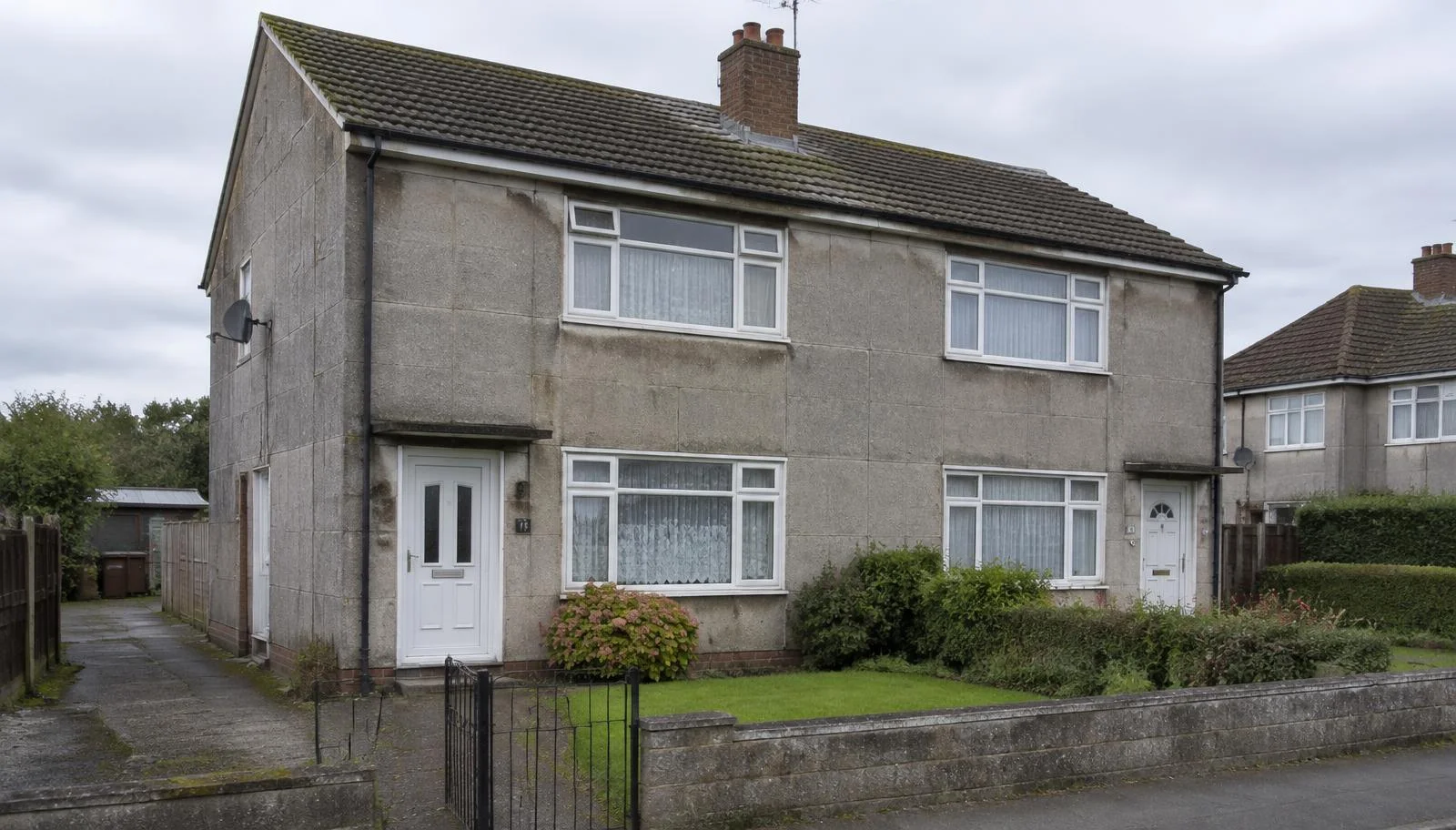
Being told that a property is a “concrete house” can create more confusion than clarity.
Concrete is used in many different forms of construction. Some properties are perfectly acceptable to mainstream lenders. Others were built using particular post-war precast reinforced concrete systems that later developed known structural problems and were formally designated defective.
Those are very different mortgage situations.
The crucial questions are what system was used, whether that system was designated defective, what condition the property is in and, where repairs have been carried out, whether there is acceptable evidence of those repairs.
If your mortgage valuation has already raised the construction as an issue, FG & Cook’s specialist lending service deals with unusual properties, non-standard construction and valuation difficulties.
Does concrete construction make a house unmortgageable?
Concrete construction does not, by itself, make a property unmortgageable.
A property might have cast concrete elements, reinforced concrete walls, concrete panels or a particular system-built structure. The lender needs to know what has actually been constructed before it can decide whether that property is acceptable.
Halifax currently states that non-traditionally constructed properties can be considered subject to inspection and design, with cases assessed on their individual merits. Its appointed valuer considers issues including construction, structural condition and future saleability.
That is very different from saying “Halifax accepts concrete houses” as a blanket rule.
This is why an estate-agent description such as “concrete construction” is rarely enough to make a mortgage decision.
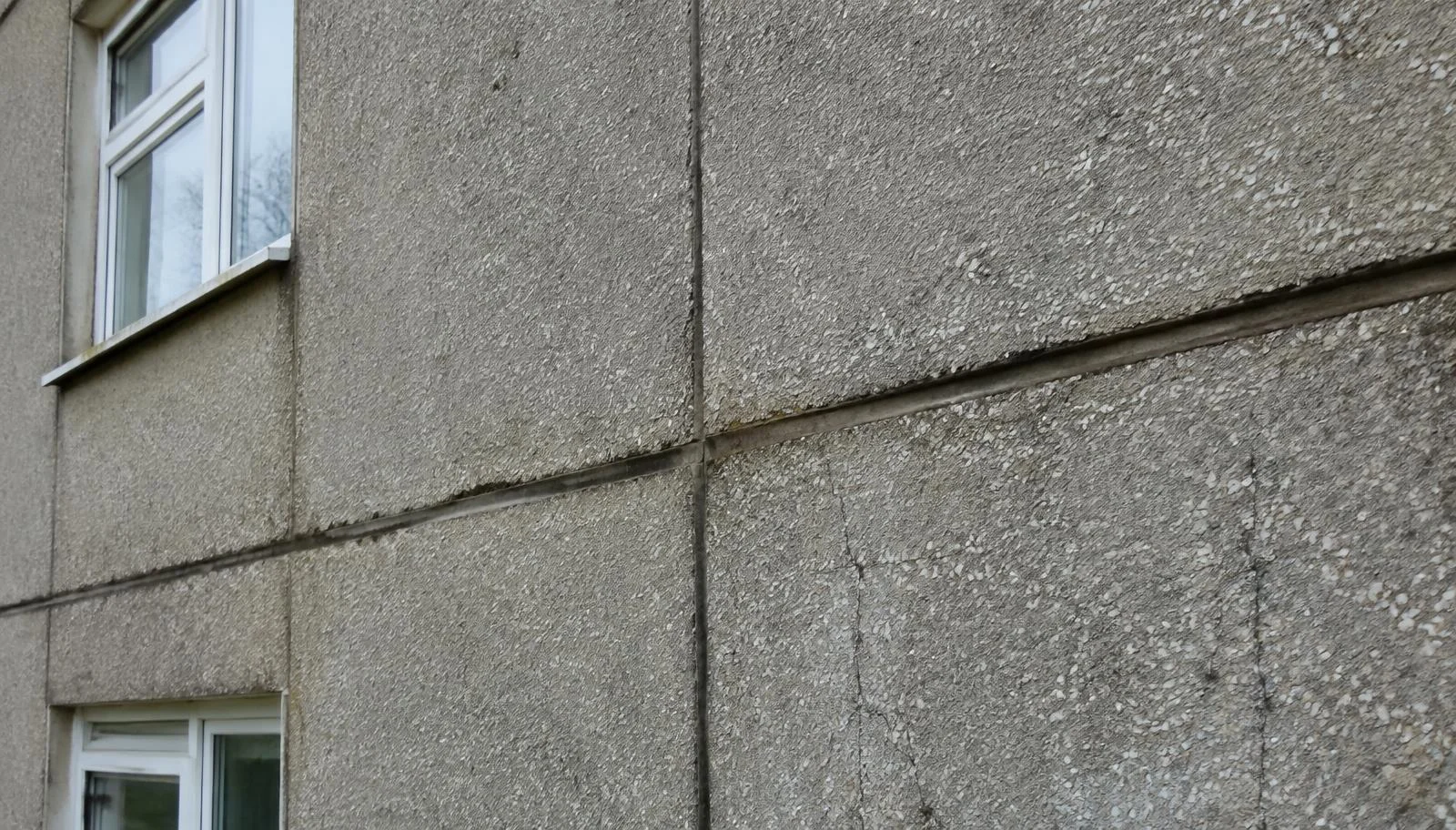
What is a PRC house?
PRC stands for precast reinforced concrete.
Rather than constructing all of the structural concrete in its final position on site, precast components are manufactured first and then assembled as part of the building.
A number of PRC and other non-traditional systems were used extensively to increase housing supply after the Second World War.
RICS describes non-traditional housing as including reinforced concrete, steel and timber-frame systems, with examples such as Airey, BISF, Trusteel and Laing Easiform. It also notes that a number of types were designated defective during the 1980s.
Two distinctions are particularly important:
PRC does not automatically mean designated defective.
And concrete does not automatically mean PRC.
Those assumptions can send a buyer down the wrong mortgage route before anyone has identified the building properly.
Why were some PRC systems designated defective?
Some post-war systems developed durability problems serious enough to affect confidence in their structural performance.
One important mechanism was deterioration around steel reinforcement within the concrete.
Reinforced concrete depends partly on the surrounding concrete remaining sufficiently alkaline to protect the steel. Where reinforcement has inadequate cover, or where carbonation and other deterioration processes reduce that protection, corrosion risk can increase.
Corroding reinforcement can expand and contribute to cracking and spalling of the surrounding concrete.
Government material describing the history of the PRC Homes scheme records how poor condition exposed in an Airey-type house led to wider investigation, after which more than 20 PRC types were designated defective. A government-supported repair programme was subsequently established to help restore confidence and mortgageability.
The Housing Defects Act 1984 created the statutory framework for assistance relating to designated defective dwellings, including works intended to help a repaired property become acceptable security to lenders.
That history explains why the phrase “defective PRC” has a specific significance. It does not mean every concrete house has the same problem, and designation does not by itself prove that every individual dwelling is currently experiencing active structural failure.
Does every PRC house have a mortgage problem?
No. The first question is whether the property is actually one of the construction types that was designated defective.
If it is not, the lender may assess the construction under its normal non-standard-property criteria.
If it is a designated defective type, lender requirements can become much more specific.
Halifax currently says that houses and flats or maisonettes made from PRC and designated defective are generally unacceptable unless repaired to a scheme that it approves. It currently does not accept designated defective PRC flats or maisonettes.
For houses, an acceptable structural repair can potentially change the lending position.
But “the house has been repaired” is not enough information on its own. The lender may need evidence establishing what was repaired, how it was repaired and whether that repair meets the standard it accepts.
A quick way to understand the distinction
| Construction / status | What the lender may need to establish | Evidence that may become relevant |
|---|---|---|
| Concrete construction not known to be designated defective | Exact construction, condition, marketability and lender policy | Construction information, valuation and sometimes further professional evidence |
| Designated defective PRC, unrepaired or repair not established | Whether the property falls outside acceptable security criteria | System identification, repair history and lender-specific requirements |
| Designated defective PRC house with recognised repair | Whether the repair and certification meet that lender’s criteria | PRC repair certificate or other lender-accepted evidence |
| Designated defective PRC flat or maisonette | Whether the lender accepts that dwelling type at all | Highly lender-specific; Halifax currently does not accept them |
The table is a guide to the questions involved, not a statement that every lender follows the same route.
What difference does a PRC repair make?
Potentially, a very significant one.
The purpose of an approved structural repair is not simply cosmetic. For designated systems, the repair is intended to address the particular structural deficiencies associated with the original construction.
Historically, the PRC Homes repair programme was established to standardise recognised repairs and help restore confidence among lenders and purchasers.
But lender treatment still varies.
A repaired property is not automatically acceptable to every lender, and a repair that looks satisfactory during an ordinary viewing may not be enough without supporting documentation.
This is one of the important differences between PRC and a simple visible defect.
With a leaking gutter, evidence that the gutter has been replaced may be straightforward. With a defective construction system, the lender may be interested in the method and certification of the structural repair, not simply whether the walls now look sound.
What is a PRC repair certificate?
A PRC repair certificate is evidence relating to the structural repair of a designated PRC property.
The precise documentation matters because lenders can apply their own requirements.
Halifax currently states that a repaired PRC property without a repair certificate is not acceptable. It does, however, allow the possibility of a retrospective repair certificate confirming that the work was carried out to the standards of the PRC Homes Repair Scheme or other standards it accepts, provided the certificate is in its required form and prepared by a suitably qualified and experienced professional.
That can provide a route where a house was repaired years ago but the original paperwork is missing.
It does not mean retrospective certification will always be possible, and it is not a universal market rule.
Another lender may have different requirements or may not accept the construction at all.
The safest approach is to establish what documentation exists before committing money to an application built around a particular lender.
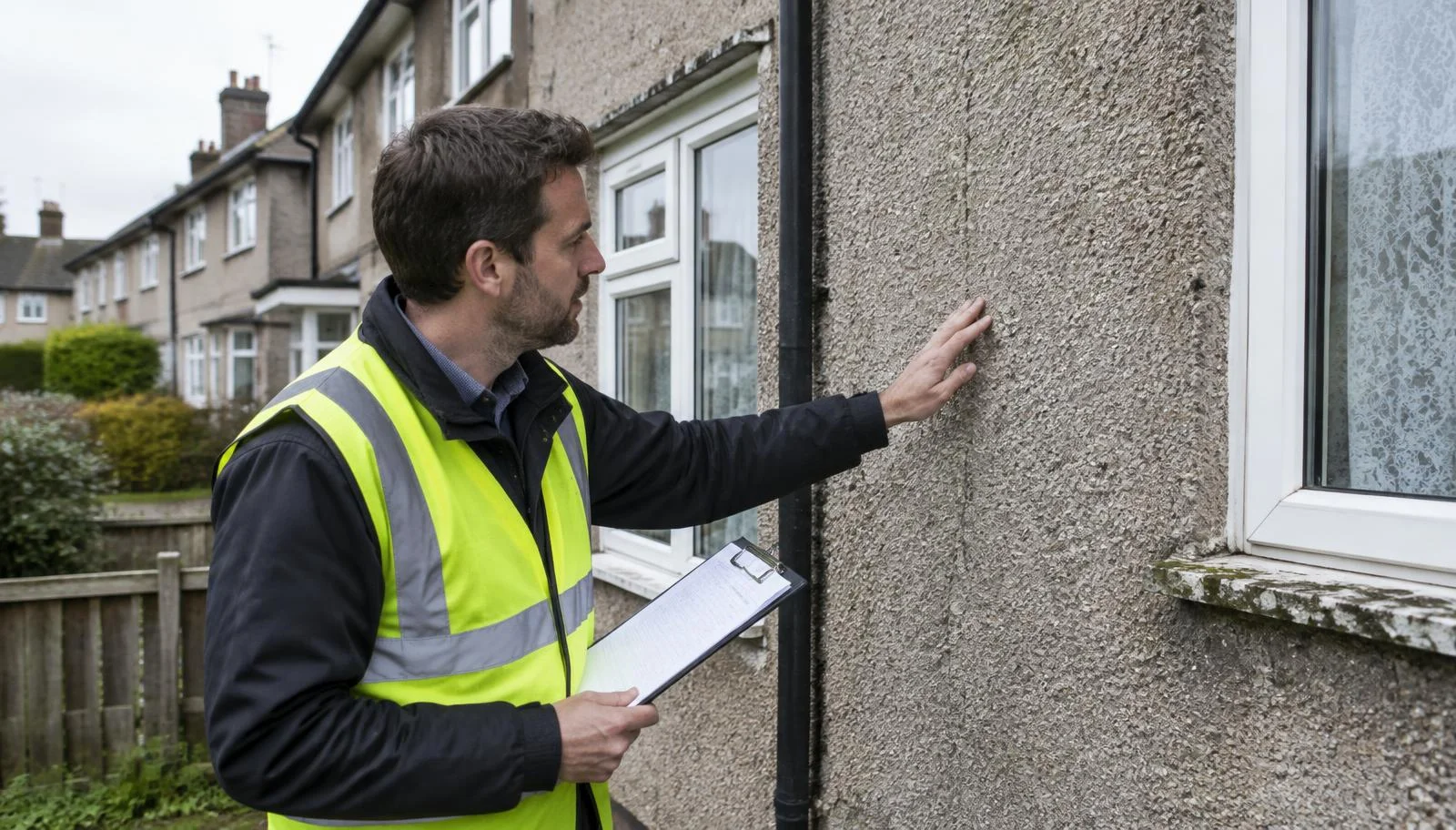
What happens during the mortgage valuation?
The mortgage valuation is for the lender.
The valuer needs to decide whether the property represents suitable security and is readily saleable.
With a conventional building, establishing the construction may be straightforward. With a system-built concrete property, the valuer may need to identify the precise construction type before recommending it.
If the valuer cannot confidently establish the system or whether a designated property has been properly repaired, the valuation may be delayed while further information is obtained.
That can include repair certificates, historical construction records or, where appropriate, specialist structural evidence. A lender may also decide that the property falls outside its acceptable-security criteria.
The crucial point for the buyer is that a mortgage valuation is not a detailed structural investigation.
RICS explains that a lender’s valuation is a limited check for the lender, while a Home Survey provides the buyer with a more detailed assessment of condition.
Even a surveyor carrying out a Home Survey cannot necessarily establish the condition of concealed reinforcement without further investigation.
A mortgage offer therefore should not be interpreted as proof that every concrete component is structurally sound.
What should you check if the house has already been repaired?
Start with the paperwork.
Ask the seller for the repair certificate and any other documentation describing the original construction and repair.
Check whether the address and property described on the documentation match what you are buying.
Your solicitor should establish whether the certificate and repair history satisfy the lender’s requirements and whether there are relevant alterations or extensions that fall outside the original repair.
That last point can matter.
Imagine that the original PRC house was repaired under an accepted scheme, but a later extension incorporates sections of the original construction or was built without clear documentation. The lender may need to understand what has and has not been repaired.
Similarly, cosmetic overcladding should not automatically be assumed to constitute a recognised structural repair.
A property can look like a conventional masonry house after alteration while its mortgageability still depends on what happened to the original structural system.
What survey or specialist advice might you need?
An unusual concrete or PRC property deserves to be understood separately from the lender’s valuation.
RICS says its Level 3 Home Survey is intended for buildings that are older, unusual, altered, run-down or otherwise more complex. That can make a Level 3 survey a sensible consideration for some system-built properties.
But even a Level 3 survey is predominantly a visual inspection.
Where the concern relates to concealed reinforced-concrete elements, corrosion or the adequacy of a structural repair, a structural engineer or other suitably qualified specialist may be needed.
Depending on the question, specialist concrete investigation can include techniques such as a covermeter survey to locate reinforcement and measure concrete cover, or carbonation-depth testing to assess how far the concrete’s protective alkalinity has been reduced. Other tests may be appropriate in different circumstances.
Those are investigative tools, not routine requirements for every PRC mortgage application. The right test should follow the defect or uncertainty that actually needs to be resolved.
A buyer should not automatically commission expensive intrusive testing simply because the words “concrete construction” appear on an estate-agent listing.
First identify the system and establish what evidence already exists.
Does PRC affect resale and remortgaging?
It can.
A repaired designated PRC house may be acceptable to a particular lender and still have a smaller mortgage market than a conventional masonry home.
That can affect future saleability.
The buyer you eventually sell to may need a lender that accepts both the original construction type and the repair documentation.
Criteria can also change. A lender accepting a particular repaired system today does not guarantee that the same lender, or the wider market, will take the same view when you remortgage or sell years later.
This is why simply obtaining one mortgage offer should not be the end of the buyer’s thinking.
Ask whether the price reflects the construction, whether the local market accepts these properties and whether you would still be comfortable owning the house if your future mortgage choices were narrower.
Lender acceptance also does not mean a repaired PRC house will necessarily be inexpensive to maintain, thermally efficient or immune from future deterioration. Those are separate property questions.
Mortgageable and sensible to buy are related questions, but they are not identical.
What should you check before exchange?
The first priority is to establish exactly what you are buying.
Find out:
- the precise construction system;
- whether that system was designated defective;
- whether structural repair was required;
- what repair was actually carried out;
- whether an acceptable repair certificate exists;
- whether later extensions or alterations affect the repaired structure;
- whether your chosen lender has accepted the specific construction and documentation.
Do not rely solely on an estate agent describing the house as “concrete”, “PRC repaired” or “mortgageable”.
And do not treat an Agreement in Principle as evidence that the property has been accepted. The lender still needs to assess the security.
If the mortgage valuation is conditional on further documentation or investigation, resolve that before exchange of contracts.
Your survey and legal enquiries should also be completed to a level appropriate for the property.
For a first-time buyer, this can feel like a great deal of additional complexity. FG & Cook’s first-time buyer mortgage service explains the wider purchase process.
Our broader guide to non-standard construction mortgages also explains why identifying the exact construction system is so important.
The fact that a lender will lend does not confirm that the house is free from structural defects, that the repairs are maintenance-free or that the agreed purchase price is appropriate.
How can FG & Cook help?
Concrete and PRC houses show why construction terminology matters in mortgage lending.
The useful question is not “Who lends on concrete houses?”
It is: what construction system is this, was it designated defective, has it been repaired appropriately, what evidence exists and which lenders currently accept that combination?
FG & Cook routinely helps with property-related mortgage difficulties and non-standard construction. The firm’s directors also include RICS-qualified surveyors, allowing the property information to be considered alongside the mortgage criteria rather than treating “PRC” as a simple lender-search term.
That does not replace the lender’s valuer, your own surveyor, a structural engineer or your solicitor.
It can help identify the right questions and lender route before an application is committed.
You can explore our specialist lending service, review our wider mortgage services or speak with FG & Cook about the property you are considering.
FG & Cook Financial Services Limited is an appointed representative of OSL Financial Services Limited, which is authorised and regulated by the Financial Conduct Authority under FRN 948512.
Your home may be repossessed if you do not keep up repayments on your mortgage.
This article is intended for general information only and does not constitute personalised mortgage, valuation, surveying, structural-engineering or legal advice. Lender criteria and individual valuation decisions can change.