Not automatically.
Spray foam insulation can make a property harder to mortgage, remortgage or sell, but its presence does not create one universal outcome across the lending market.
Some lenders may decline a property where spray foam has been applied to the underside of the roof. Others may consider it after receiving installation paperwork, a specialist inspection or confirmation that the roof structure remains sound. In some cases, removal or wider roof remediation may be required before the lender will proceed.
The decisive issue is often not simply whether foam is present. The lender and valuer need to understand what product was used, where and how it was installed, whether ventilation and condensation risks were assessed, whether the roof timbers remain inspectable and whether there is evidence of moisture or decay.
The House of Commons Library reported in January 2026 that some homeowners had experienced difficulty selling or remortgaging homes with spray foam insulation. It also referred to a 2024 BBC survey in which a quarter of the largest mortgage providers surveyed, and all equity-release lenders surveyed, said they would not lend on homes with spray foam in the roof. That does not mean every lender refuses every affected property.
FG & Cook's specialist lending advisers can investigate lender appetite before an application is submitted and coordinate with the buyer's surveyor, valuer and solicitor where further property evidence is required.
What is spray foam insulation?
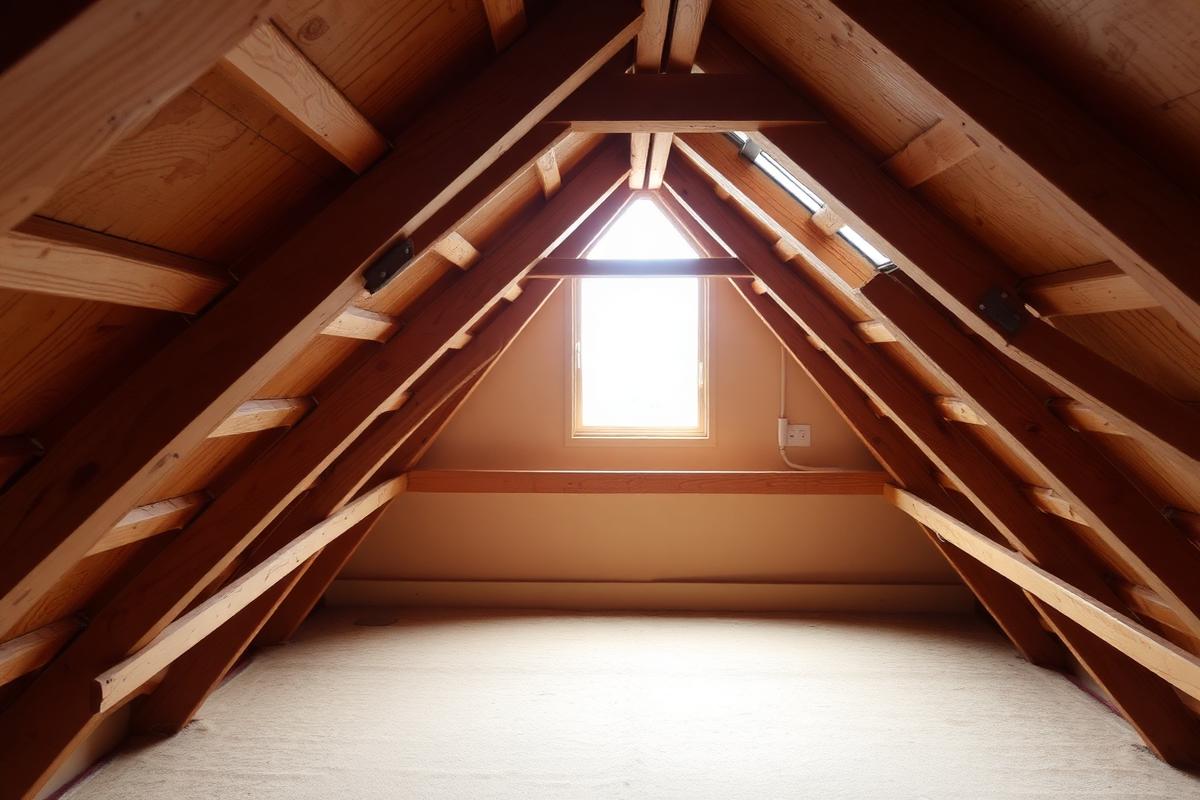
Spray polyurethane foam is a liquid insulation material applied with a spray gun. It expands and sets to form an insulating layer and is often installed between or around roof timbers in lofts and roof spaces.
It is commonly divided into two broad types:
- Open-cell foam, which remains softer and is generally more vapour permeable.
- Closed-cell foam, which sets more rigidly and is generally less vapour permeable.
Closed-cell foam is denser and can restrict vapour movement more strongly. Open-cell foam is softer and more permeable, but neither description establishes that a particular roof installation is safe or mortgageable.
Spray foam itself is not automatically defective. The concern is that retrospectively changing the way an existing roof manages heat, moisture and ventilation can create risks if the work was not properly designed.
RICS treats spray foam as a significant modification rather than a simple cosmetic alteration, particularly where it has been applied retrospectively to the underside of an existing roof.
Why can spray foam cause mortgage problems?
Mortgage lenders rely on a valuation to decide whether the property provides acceptable security for the loan.
Spray foam can make that assessment harder because it may conceal rafters, battens or the underside of the roof covering. If leaks or timber decay are hidden behind the foam, a surveyor may be unable to establish the true condition of the structure.
Ventilation is another concern. A roof originally designed as a ventilated cold roof may behave differently once foam is applied below the roof covering. Where moisture cannot escape, condensation may form against timber or other roof components.
The paperwork may also be incomplete. A valuer may have no reliable evidence of the product, the installer's competence, condensation-risk calculations, roof-condition checks, ventilation strategy, certification or warranty.
Foam can also make later repairs more difficult. It may adhere to membranes, battens, timbers and roof coverings, increasing the complexity and cost of removal or roof renewal.
These uncertainties can affect the valuer's opinion of condition, marketability and value.
Does the type of foam make a difference?
It can, but the labels “open cell” and “closed cell” do not decide the mortgage outcome by themselves.
Closed-cell foam is more rigid and less vapour permeable, which may increase concern where the roof was not designed with a suitable vapour-control and ventilation strategy.
Open-cell foam may allow more vapour movement, but it can still obscure parts of the roof and may still have been installed without appropriate design checks.
The valuer may need to know whether the foam was applied directly to the roof covering, whether a breathable membrane is present, whether the rafters remain visible, whether eaves and ridge ventilation have been maintained and whether the roof was dry and watertight before installation.
A lender is unlikely to accept a property merely because the installer describes the product as breathable. The whole roof build-up matters.
Are all properties with spray foam treated in the same way?
No.
Most mortgage concern relates to foam retrospectively applied inside an existing roof space. That is different from a new-build or converted structure where insulation formed part of the original design and construction.
A purpose-designed system may present differently from an older pitched roof where foam was sprayed directly onto the underside of tiles as an after-market measure.
The lender may also distinguish between thermal insulation, foam used to stabilise deteriorating tiles, foam in walls or floors, a structural insulated system and foam installed as part of a compliant loft conversion.
Where a loft conversion contains spray foam, buyers should also check whether the conversion has appropriate planning documentation where required and a building-control completion certificate. Those documents do not guarantee mortgage acceptance, but their absence can create a separate legal and valuation issue.

Why does the mortgage valuer matter?
The lender's valuer is not carrying out a full structural survey for the buyer.
Their role is to advise the lender whether the property provides suitable security and whether any issue affects value or marketability.
When spray foam is present, the valuer may record it without recommending further action, ask for installation records, request a specialist report, apply a valuation retention, state that the roof cannot be inspected adequately or decline to recommend the property as suitable security.
The valuer must also follow the individual lender's instructions. A technically reassuring report cannot force a lender to depart from a policy that excludes retrospectively installed roof foam.
A lender's willingness to proceed should never be treated as proof that the roof is defect free. Buyers should still obtain appropriate independent advice.
What documents might a lender request?
Useful evidence can include the original installation contract, product name, manufacturer, installation date, installer details, product certification, condensation-risk calculations, thermal calculations, a pre-installation roof-condition report, installation photographs, warranty documents and evidence of ventilation provisions.
The lender or valuer may also request an independent roof survey, moisture readings or evidence of completed remedial work.
A British Board of Agrément or Kiwa certificate can provide information about the product and its intended use. It does not prove that the foam was correctly specified and installed in that particular roof.
The valuer may still need evidence about the individual property's construction and condition.
Does correct paperwork guarantee that a lender will lend?
No.
Good documentation can improve the position, but it cannot guarantee acceptance.
A lender may still decline because its policy does not permit retrospectively installed roof foam, the structure remains concealed, moisture readings are concerning, the installation records are incomplete or the property may be difficult to resell.
The proposed loan-to-value may also affect the lender's appetite, but there is no universal deposit or loan-to-value rule for spray foam cases.
Conversely, missing paperwork does not always mean the property is permanently unmortgageable. A suitable independent inspection, remediation or removal may create a route forward.
Will spray foam have to be removed?
Sometimes, but not always.
Removal may be recommended where the foam prevents inspection of the structure, was applied to a defective or leaking roof, is associated with condensation or timber decay, conflicts with the roof design or cannot be reconciled with the lender's property policy.
It is important not to arrange removal solely because a removal company says the property is “unmortgageable”.
An independent surveyor or suitably qualified building professional should first assess the roof and advise whether removal is necessary and how the work should be carried out.
In some cases, ventilation changes, localised opening-up or other remedial measures may be more appropriate than immediate wholesale removal.
Can removing the foam make the property mortgageable?
It may help, but removal is not automatically the end of the issue.
The lender or valuer may want evidence that the relevant foam has been removed, the timbers are visible, the removal did not damage the roof, moisture or decay has been repaired, ventilation has been reinstated and the roof covering remains serviceable.
Foam can adhere strongly to membranes, battens, timbers and tiles. Removal may damage those components, meaning the practical remedy is partial or complete roof renewal rather than simple stripping.
The property should not be assumed acceptable until the lender's valuer has inspected the post-remediation condition and the lender has confirmed that the security is satisfactory.
What if the roof cannot be fully inspected?
This is one of the most difficult situations.
A mortgage valuer may be unwilling to give the lender sufficient assurance where major structural elements remain hidden.
A specialist report may help, but it cannot always overcome the physical inability to inspect the timber.
A useful independent report should address the foam type and location, roof construction, moisture levels, ventilation, visible timber condition, evidence of leakage, signs of condensation, whether opening-up is necessary and whether removal or repair is recommended.
A report arranged or paid for by the original installer may carry less weight than a genuinely independent assessment.
Can a property with spray foam be valued at £0?
Sometimes a mortgage valuation may be reported at £0, but that does not mean the property has no market value.
A £0 mortgage valuation usually means the valuer cannot recommend the property as suitable security in its current condition or with the evidence available.
This may happen because the roof cannot be inspected, a specialist report is required, the lender's policy excludes the installation, remedial work is needed or the valuer cannot establish satisfactory marketability.
The same property might receive a normal valuation after suitable investigation or remediation, or it may be accepted by another lender with a different policy.
A mortgage valuation and an open-market sale price are related, but they are not the same thing.
Can you remortgage a property with spray foam?
Potentially.
The first step is to establish whether the existing lender will offer a product transfer without a fresh physical valuation.
A product transfer may allow the borrower to remain with the current lender on a new deal, although this depends on the lender's process and the borrower's wider circumstances.
A full remortgage to a new lender is more likely to trigger a new valuation and a fresh review of the spray foam.
Homeowners should not assume that because their current mortgage was granted before the foam was installed, another lender will accept it now.
Our specialist lending service may be relevant where the property falls outside standard high-street criteria.
What should a buyer do before exchanging contracts?
Do not wait until after exchange to investigate the foam.
Tell the mortgage adviser immediately, obtain the installation records from the seller and make sure the lender and valuer know the foam is present.
The buyer should consider commissioning an appropriate independent survey or specialist roof inspection, checking whether the structure can be inspected adequately and obtaining quotations for any recommended remediation.
The solicitor should review warranties, guarantees, disclosure and any building-control documentation, particularly where the foam forms part of a loft conversion.
A basic lender valuation should not be treated as a substitute for an independent home survey. Even where the lender accepts the property, the buyer may still inherit condensation, repair or resale risks.
First-time buyers can also review FG & Cook's first-time buyer mortgage service before making an offer on a non-standard property.
What should an existing homeowner do?
Do not panic or instruct the first company that offers to remove the foam.
Start by collecting the paperwork and establishing when the installation took place, which product was used, who installed it, whether a guarantee exists and whether roof-condition and condensation calculations were completed.
An independent surveyor can then advise whether further investigation, ventilation work, monitoring, localised removal or complete removal is appropriate.
There is currently no general government funding to remove spray foam. Where installation was defective, the homeowner may need to pursue the installer or an insurance-backed guarantee.
Be cautious of unsolicited callers claiming that removal is legally required or that a government-backed scheme will pay for it.
Does an installation guarantee solve the mortgage problem?
Not necessarily.
A guarantee may cover only limited defects or may depend on the installer remaining in business.
The lender may examine who issued the guarantee, whether it is insurance backed, what it covers, whether it transfers to a buyer and whether the installation complied with its conditions.
A warranty is useful evidence, but it is not a replacement for an acceptable valuation and a sound roof.
Can specialist lenders accept spray foam?
Some specialist or manually underwritten lenders may consider non-standard properties that fall outside automated high-street criteria.
That does not mean there is a guaranteed “spray foam mortgage”.
A specialist lender may still require a satisfactory valuation, a specialist roof report, full installation documentation, a lower loan-to-value, completed remediation or removal before completion.
The available lender range may be smaller, and the rate or fees may be higher than for a straightforward property.
The correct route is to investigate the property and lender criteria before making repeated applications. Multiple applications will not solve a physical issue that each valuer identifies.
Common mistakes we frequently see
One common mistake is assuming that all spray foam makes a property permanently unmortgageable.
Another is assuming the opposite: that a certificate from the installer guarantees acceptance.
Buyers may also rely on the seller's statement that the foam is “open cell and breathable” without obtaining independent evidence about the roof design and condition.
A further mistake is paying for removal before establishing what the lender, valuer or independent surveyor actually requires.
Perhaps the most serious mistake is exchanging contracts while the mortgage offer remains subject to a specialist report or remedial work.
How can FG & Cook help?
Spray foam cases sit at the point where mortgage criteria, valuation policy and building condition overlap.
FG & Cook's specialist lending advisers can review the mortgage purpose, installation documents, valuer's comments, specialist reports, proposed remediation, loan-to-value and current lender criteria.
FG & Cook's directors include RICS-qualified surveyors, which can help the firm understand the building and valuation issues affecting a lending decision. Mortgage advice does not replace the role of the independent surveyor, structural engineer, roofing specialist or solicitor.
The aim is to coordinate the evidence and identify lenders whose property policy may fit the case.
You can also explore FG & Cook's wider mortgage services or contact an adviser before making an offer, arranging removal or submitting an application.
FG & Cook Financial Services Limited is an Appointed Representative of OSL Financial Services Limited, which is authorised and regulated by the Financial Conduct Authority under Firm Reference Number 948512.
Your home may be repossessed if you do not keep up repayments on your mortgage.
This article is intended for general information only and does not constitute personalised mortgage, valuation, surveying, structural, legal or building advice. Lender policies and individual valuation decisions vary.