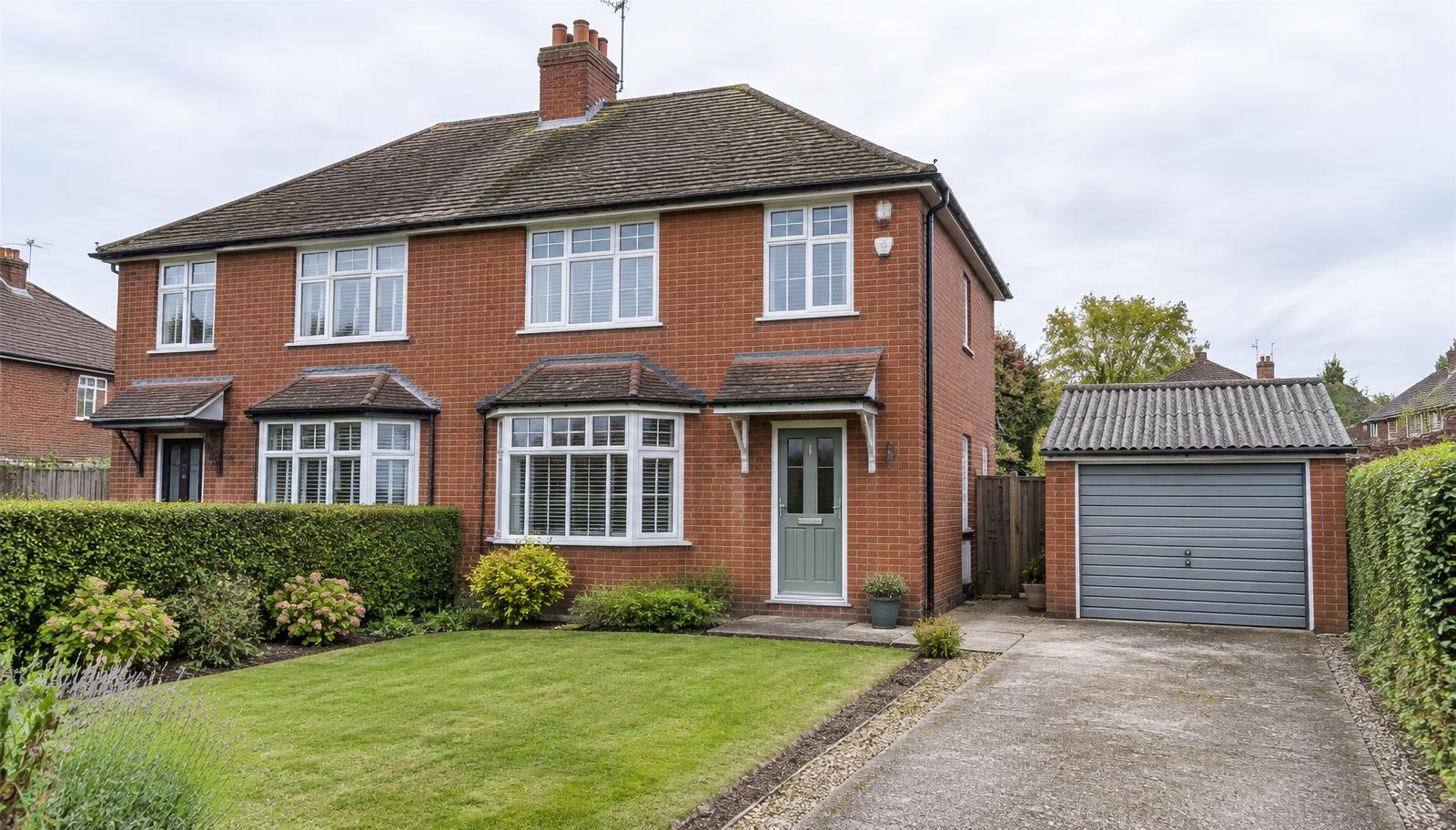
Finding asbestos mentioned in a survey can make a buyer wonder whether the mortgage is about to disappear.
Usually, the answer is more nuanced.
Asbestos does not automatically make a property unmortgageable. What matters is what the material is, where it is, what condition it is in, whether it is likely to be disturbed and whether it affects the property’s value, saleability or suitability as mortgage security.
A sheet of intact asbestos cement on a garage roof is a very different issue from damaged asbestos insulating board around a heating system. Both are different again from a building where asbestos-containing panels form part of the load-bearing construction.
The lender’s valuer may be satisfied without further action, or may want more information before recommending the property.
If a valuation or survey has already created a problem with your application, FG & Cook’s specialist lending service is designed for cases where the property itself does not fit straightforward lending criteria.
Does asbestos automatically stop you getting a mortgage?
No. A lender’s main concern is whether the property provides acceptable security for the loan. Its valuer will therefore consider condition, value, saleability and whether defects materially affect the property.
The simple presence of an asbestos-containing material does not necessarily prevent that.
HSE guidance shows how widely asbestos was historically used in residential buildings. Possible locations include textured coatings, floor tiles, asbestos cement roof sheets and gutters, water tanks, pipe lagging, asbestos insulating board and sprayed coatings. These materials do not all present the same risk or require the same type of work.
The mortgage question becomes more difficult where the material is badly damaged, likely to be disturbed, associated with substantial remedial work, or forms part of a construction system that a particular lender will not accept.
Halifax’s current property criteria illustrate that distinction. It assesses property suitability on its individual merits, but specifically lists load-bearing panels of asbestos or gypsum plaster construction among unacceptable construction types. That is a Halifax rule, not evidence that every home containing any asbestos is unacceptable to every lender.
What kinds of asbestos might be found in a home?
Asbestos was incorporated into a wide range of building products. HSE lists examples including asbestos cement sheets, gutters, flues and water tanks; textured coatings; floor tiles; pipe and boiler lagging; sprayed coatings; and asbestos insulating board, often abbreviated to AIB.
A survey report may describe one of these as a “suspected asbestos-containing material”, but that phrase covers materials with very different characteristics.
Some products contain fibres tightly bound into a cement matrix. Others are more friable, meaning fibres can be released more readily if the material is damaged or disturbed. Condition and location matter too: an intact material that can remain undisturbed presents a different practical issue from damaged board beside a boiler or deteriorated insulation around pipework.
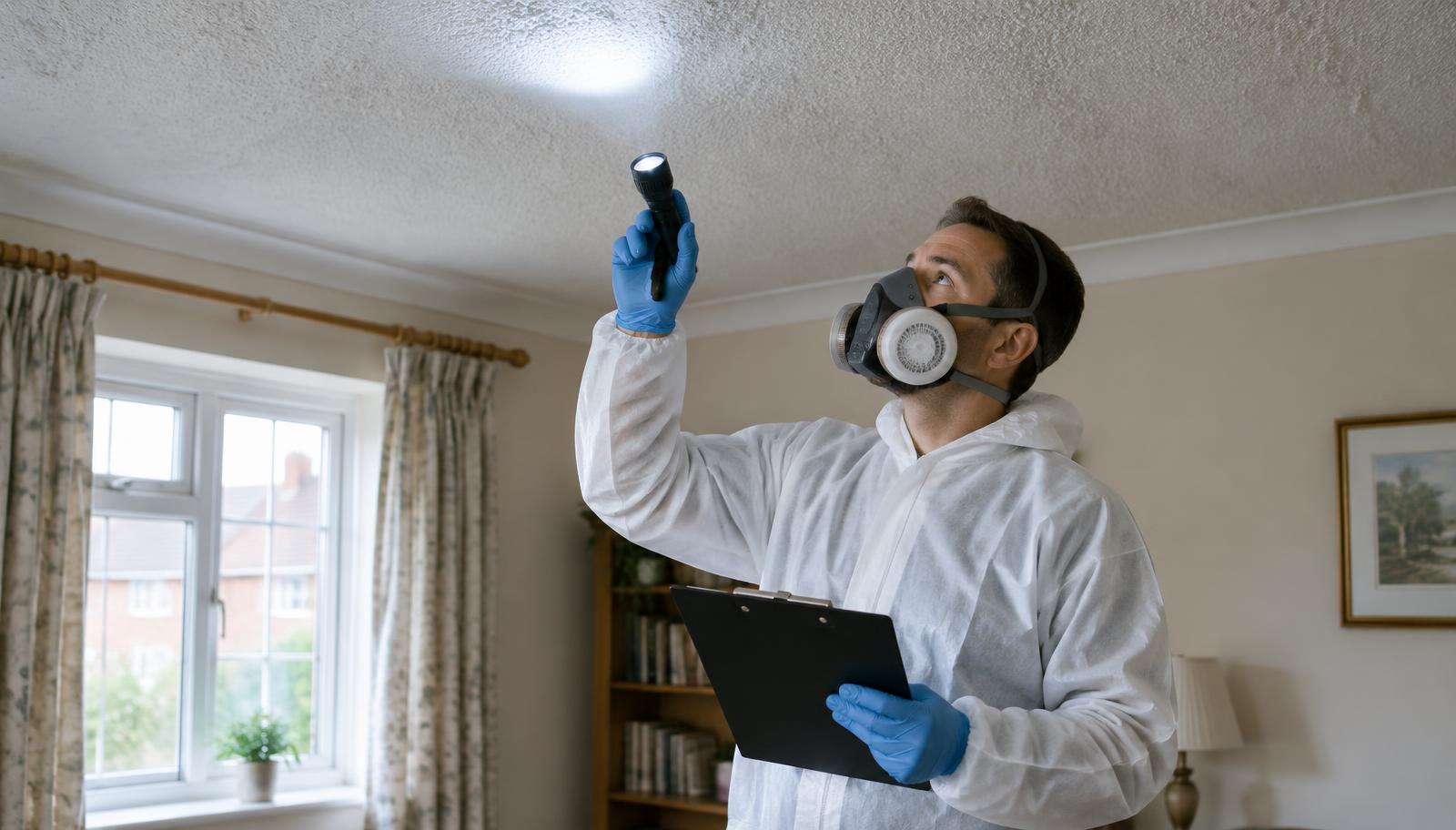
Why does the type and condition of asbestos matter?
The health risk from asbestos comes from breathing in asbestos fibres, so disturbance is an important part of the assessment.
HSE does not treat every asbestos task in the same way. Some work involving lower-risk bonded products can be non-licensed when the relevant conditions, competence and controls are met, while work involving higher-risk materials can require a licensed contractor.
For a homebuyer, the practical lesson is simple: do not drill, scrape, break or remove a suspected asbestos material just to find out what it is.
The fact that something might contain asbestos is not the same as a confirmed laboratory identification. A surveyor may recognise a material commonly associated with asbestos and report it as suspected, but appearance alone cannot reliably confirm whether asbestos fibres are present.
| Material / product | Typical residential location | Why it may matter |
|---|---|---|
| Asbestos cement | Garage roofs, external sheets, some gutters and flues | Often a bonded material. Condition, accessibility and planned disturbance are key. |
| Textured coatings | Some ceilings and wall finishes | May be left undisturbed, but refurbishment can change the practical risk. |
| Asbestos insulating board (AIB) | Partitions, ceiling tiles, service cupboards and other linings | More friable than asbestos cement and more likely to require specialist investigation or controlled work. |
| Pipe lagging / sprayed coatings | Older heating systems, plant areas and service spaces | Higher-risk materials. Damage or planned disturbance can materially affect cost, safety planning and lender confidence. |
What happens if the mortgage valuer identifies asbestos?
A mortgage valuation is primarily for the lender. It is not the same thing as a Home Survey and it is not an asbestos survey.
Nationwide’s current valuation guidance makes that distinction clear: the mortgage valuation is used to establish whether the property is suitable security and may not even involve a physical inspection. Nationwide also warns borrowers not to rely on it to identify defects and recommends considering a Level 2 or Level 3 Home Survey for the buyer’s own purposes.
If the valuer sees suspected asbestos, there is no single automatic outcome. They might consider the material sufficiently minor that it does not affect the valuation, comment on it and recommend further advice, request a specialist report or, in a more significant case, be unwilling to provide a usable mortgage valuation until the extent and cost of the issue are clearer.
Halifax states that properties must be habitable, readily saleable, structurally sound and capable of being insured, and that some or all of the mortgage advance may be retained until required works are completed.
So a survey mentioning asbestos and a lender actually refusing to lend are not the same event.
Will the asbestos have to be removed?
Not necessarily. Leaving an asbestos-containing material safely in place can sometimes be preferable to unnecessary disturbance.
The appropriate response depends on the material, its condition, its location and what you intend to do with the property.
For example, a buyer might be content to leave an intact asbestos cement outbuilding roof alone. The calculation changes if that buyer intends to demolish the outbuilding immediately after completion.
The mortgage lender may also have a separate view from the buyer. A lender could be satisfied with a property in its present condition while you still decide that the likely cost and inconvenience of future asbestos work changes how much you are willing to pay.
Mortgageable does not mean maintenance-free, risk-free or inexpensive to alter.
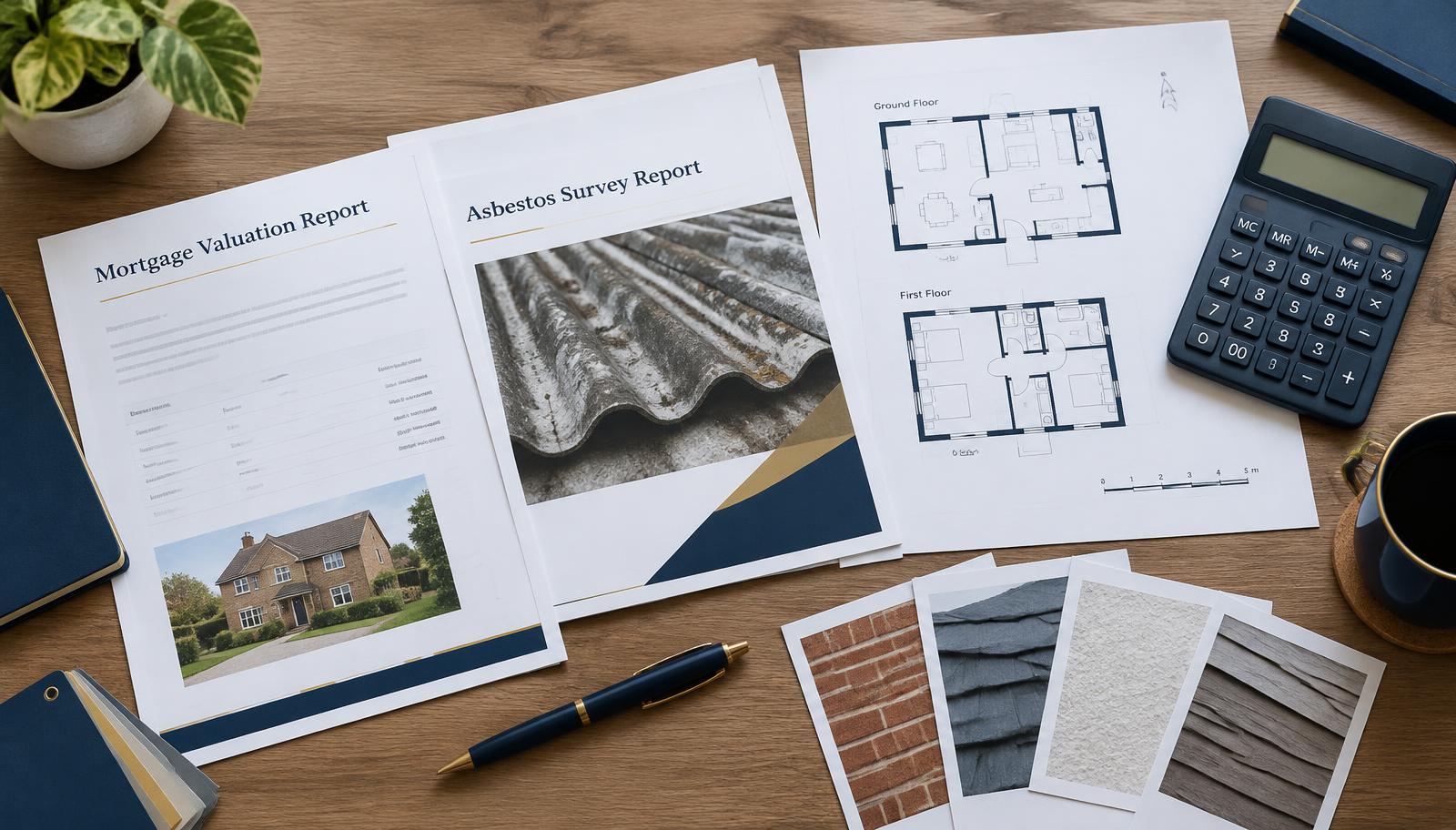
Do you need an asbestos survey?
Sometimes, but not automatically because the property is older.
For an ordinary home purchase, the starting point is normally the wording of your survey and mortgage valuation.
If your Home Survey identifies a specific suspected material in good condition and there is no intention to disturb it, the immediate decision may be quite different from buying a property that needs extensive refurbishment.
If you intend to strip ceilings, replace an old heating system, demolish an outbuilding or undertake major alterations shortly after completion, obtaining the right asbestos information before those works becomes much more important.
The Control of Asbestos Regulations 2012 place specific duties on those responsible for non-domestic premises and the common parts of multi-occupancy domestic buildings. Even where the statutory duty to manage does not apply inside a private home, work that could disturb suspected asbestos still needs to be planned safely and suitable information may be required before refurbishment or maintenance begins.
An asbestos survey and any laboratory analysis should be carried out by appropriately competent people. Do not create your own sample by breaking off part of a ceiling, board or pipe insulation.
What if the asbestos forms part of the building’s construction?
This is one of the most important mortgage distinctions.
There is a major difference between a conventional house that happens to contain asbestos-containing materials and a building whose construction itself relies on asbestos-containing panels or another unusual system.
The first may require little or no lender action. The second can become a non-standard construction issue.
As noted earlier, Halifax currently excludes load-bearing panels of asbestos or gypsum plaster construction. Its wider criteria also state that non-standard construction is assessed on individual merit. Other lenders may apply different criteria.
This is why searching online for “do lenders accept asbestos?” can produce misleading answers. Two properties can both contain asbestos but present completely different risks to a mortgage lender.
FG & Cook’s specialist lending service covers non-standard properties and valuation problems where mainstream criteria do not fit neatly.
What should you check before exchange?
Start with the exact wording of the survey. “Possible asbestos-containing textured coating noted” is not the same finding as “damaged suspected asbestos insulating board requiring specialist investigation”.
Then establish what the lender actually requires. Do not assume that a recommendation in your Home Survey is automatically a condition of the mortgage, and do not assume that a mortgage offer means the asbestos has been professionally assessed.
If further investigation or remedial work is required by the lender, resolve that condition before exchange of contracts. A conditional mortgage position is not an unconditional green light to become legally committed to the purchase.
You should also think beyond the mortgage. Consider whether you intend to refurbish the property, whether suspected asbestos is located in areas likely to be altered, and whether removal or specialist management could materially affect your budget.
Where removal is likely, obtain appropriate professional advice and realistic quotations rather than assuming a figure.
This can be particularly important for a first-time buyer whose available cash is already allocated between the deposit, legal costs and moving expenses. Our first-time buyer mortgage service explains the wider mortgage process.
Lender acceptance protects the lender. It does not confirm that a property is asbestos-free, that every asbestos-containing material has been located or that future alteration will be straightforward.

What about asbestos in a leasehold flat?
The same mortgage principles apply, but responsibility for the building can be more complicated.
Asbestos might be contained within the flat itself, or it could be located in communal service areas, risers, roof spaces, corridors or other common parts.
Under the Control of Asbestos Regulations 2012, the duty to manage asbestos applies to the common parts of multi-occupancy domestic premises, but not generally to the private domestic area inside an individual flat.
Who pays for particular works is a separate legal and financial question. The lease will determine the repairing obligations and the extent to which costs can be recovered from leaseholders through the service charge.
If substantial asbestos work is planned in the common parts, it may amount to major works. Where a leaseholder’s contribution exceeds the relevant statutory threshold, the landlord may need to follow the Section 20 consultation process. That can matter to a buyer because an existing or forthcoming major-works bill may affect the cost of the purchase and should be investigated by the solicitor before exchange.
Do not assume that the freeholder automatically bears the cost simply because the asbestos is outside the flat.
How can FG & Cook help?
Asbestos cases can sit at the point where mortgage criteria, valuation, construction and building condition overlap.
The useful question is rarely simply “Which lender accepts asbestos?” It is what material has been identified, what condition is it in, is it merely present within the building or part of the construction itself, and has the lender’s valuer actually imposed a condition?
FG & Cook’s directors include RICS-qualified surveyors, and the firm supports mortgage cases affected by property defects, non-standard construction and valuation issues.
That surveying knowledge does not replace an asbestos surveyor, laboratory analyst, licensed asbestos contractor where one is required, or your solicitor. It can, however, help connect the property information with the mortgage process and identify lenders whose current criteria may fit the actual circumstances rather than the single word “asbestos”.
You can explore our wider mortgage services or speak with FG & Cook to discuss where you stand.
FG & Cook Financial Services Limited is an Appointed Representative of OSL Financial Services Limited, which is authorised and regulated by the Financial Conduct Authority under Firm Reference Number 948512.
Your home may be repossessed if you do not keep up repayments on your mortgage.
This article is intended for general information only and does not constitute personalised mortgage, surveying, asbestos, health and safety or legal advice. Lender criteria and individual valuation decisions can change.