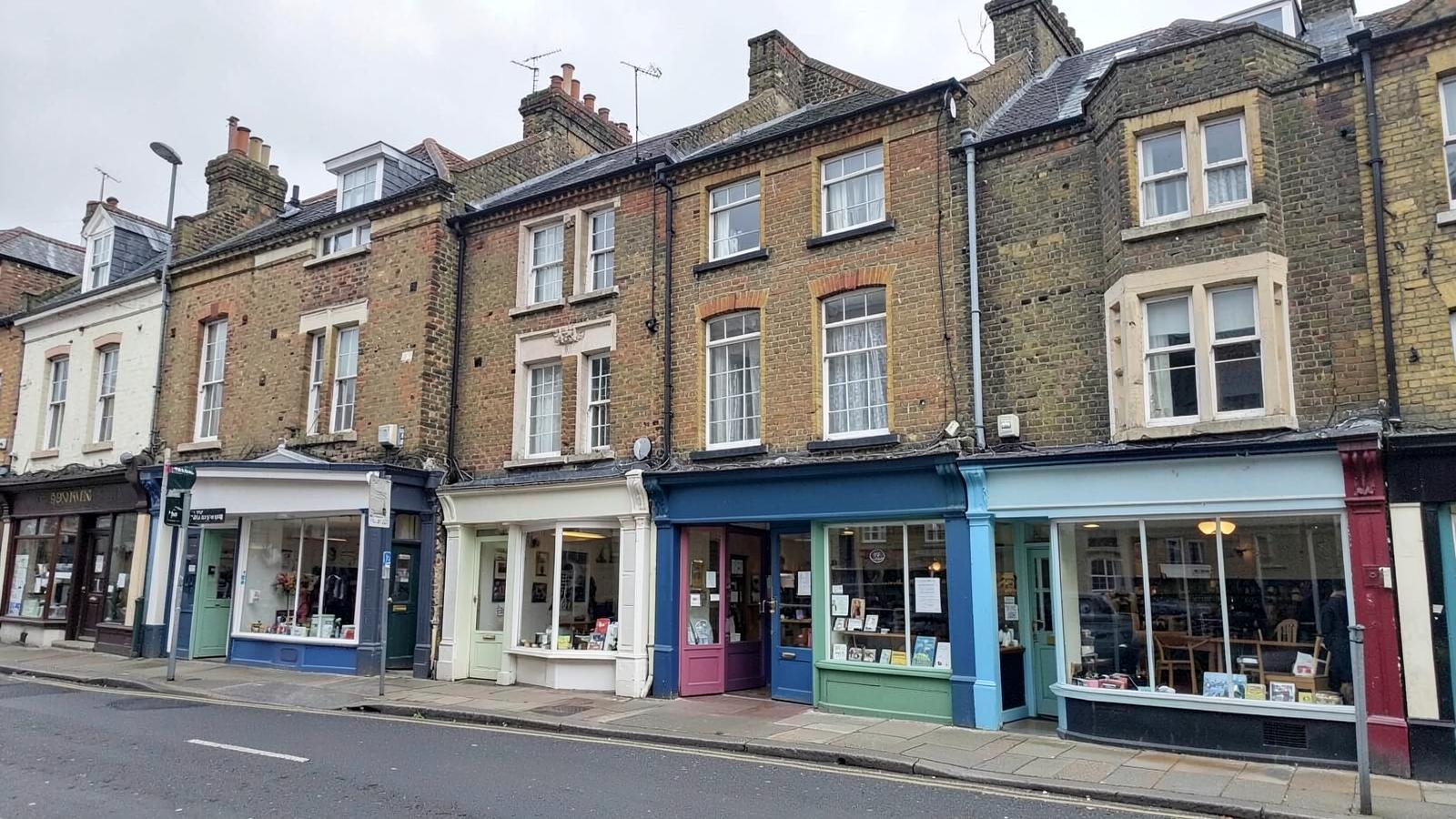
Yes, it is possible to get a mortgage on many flats above shops or other commercial premises.
However, lenders do not treat every commercial use in the same way. A flat above a quiet office or small daytime shop may be viewed very differently from one above a late-night takeaway, pub or workshop.
The decision is rarely based only on the fact that there is a business downstairs. Lenders and their valuers will consider the commercial use, the flat's access, noise and smells, the lease arrangements, building safety, the proportion of commercial space and how easy the property may be to sell in future.
FG & Cook combines specialist mortgage advice with in-house RICS surveying expertise. This means we can consider both sides of the issue: which lenders may accept the property and whether its layout, condition and surroundings are likely to satisfy the valuer.
Why can flats above shops be harder to mortgage?
A lender is not only deciding whether you can afford the mortgage. It must also decide whether the flat provides acceptable security for the loan.
If the mortgage is not repaid, the lender may eventually need to sell the property. It will therefore consider anything that could narrow the future buyer market or affect value.
Noise, smells, late opening hours, deliveries, refuse storage and customer activity can all matter. So can security, fire separation, the condition of communal areas, shared access and the way residential and commercial parts of the building are maintained.
None of these automatically makes the flat unmortgageable. The decision is based on their combined effect on the property's value, demand and future saleability.
Which businesses cause lenders the most concern?
The business operating below or beside the flat is often one of the most important factors.
Lenders may be more comfortable with uses that create limited noise, smell or late-night activity, such as offices, estate agencies, professional services or quiet daytime retail.
Greater concern may arise where the premises are used as a pub, bar, nightclub, restaurant, hot-food takeaway, launderette, workshop or business storing hazardous or flammable materials.
Planning terminology can help explain the distinction, although it does not determine the mortgage decision. In England, many shops, offices, cafes and other commercial uses fall within Class E, while pubs and hot-food takeaways are generally treated as sui generis uses – meaning they sit outside the standard use classes. The planning position differs elsewhere in the UK and should be checked locally.
A quiet Class E retail unit may create fewer valuation concerns than a late-night takeaway with commercial extraction, deliveries and regular evening footfall. Even then, lenders make individual decisions and the physical effect on the flat matters more than the planning label alone.
The exact business is therefore more useful than simply saying the flat is “above a shop”.
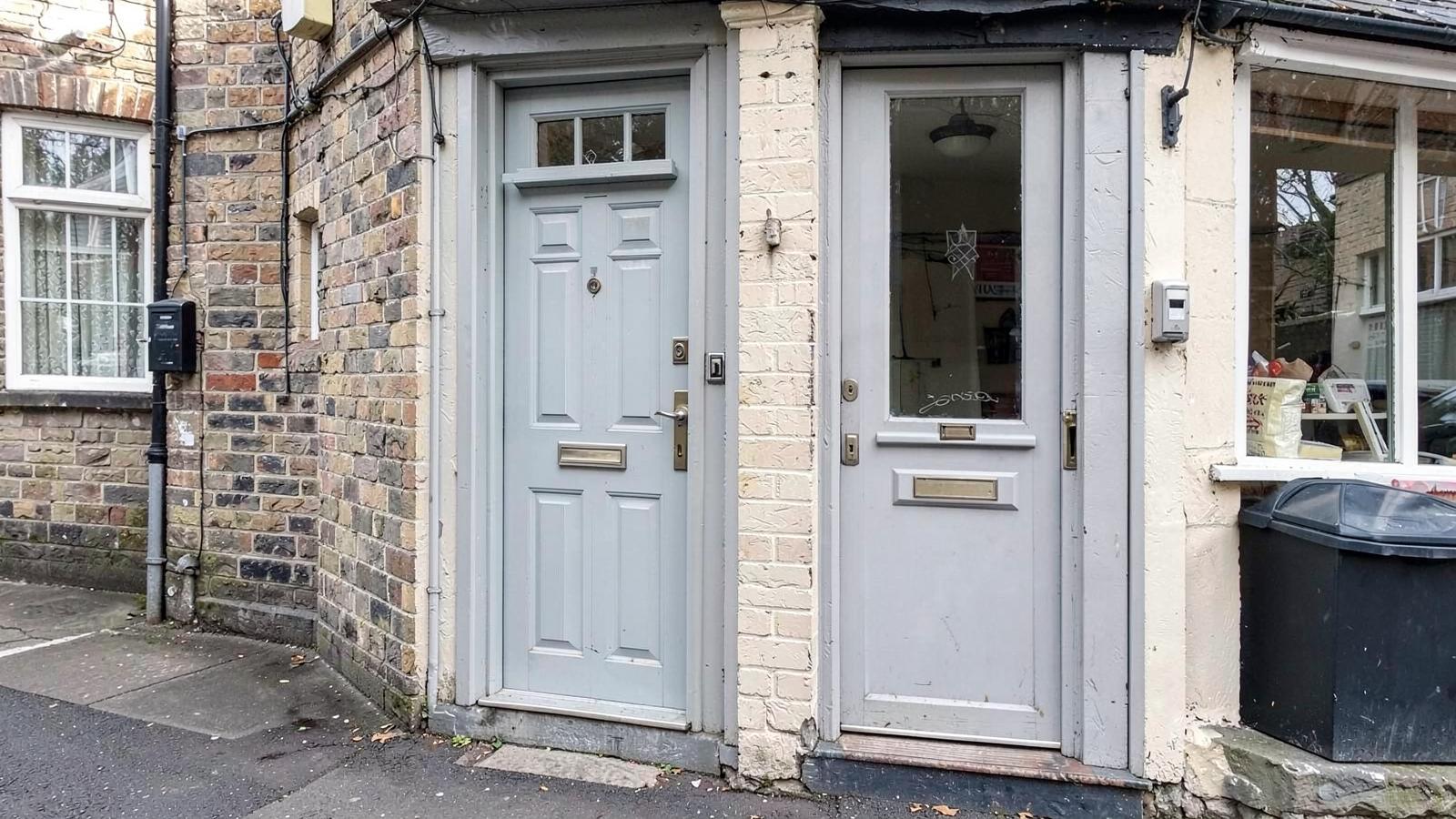
Does the flat need its own entrance?
Independent access can be crucial.
Many lenders prefer the flat to have its own secure entrance, separate from the commercial premises. Problems can arise if reaching the flat requires walking through the shop, using a stockroom or commercial corridor, passing through a kitchen, crossing a refuse area or relying on poorly maintained external stairs.
A shared doorway from the street may be acceptable where the residential entrance and staircase are clearly separated from the business.
The lender and valuer may consider whether the flat can be occupied independently, whether access rights are documented, who maintains the stairs or communal entrance, and whether access would remain available if the business changed hands.
A flying freehold is a separate legal issue that can occasionally arise in older mixed-use buildings, where part of one property physically extends over or under another property owned separately. It is not unique to flats above shops and it is not automatically unacceptable, but the solicitor and lender may need to check the rights of support, access and repair.
An attractive flat can still be difficult to mortgage if the access or legal arrangements are poor.
What will the mortgage valuer consider?
The mortgage valuation is primarily for the lender. The valuer will consider whether the property is suitable security and whether there is a reliable market for it.
The current and permitted commercial use
The business operating today is important, but the valuer may also consider the uses allowed by the commercial lease and planning position. A quiet unit today may not remain quiet indefinitely.
The position of the flat
A flat directly above a kitchen, extraction system or busy service yard may be treated differently from one on an upper floor or at the quieter rear of the building.
Local demand and comparable sales
Flats above shops are common in many town centres and London neighbourhoods. Where similar flats sell regularly with mortgages, the valuer may have strong comparable evidence.
A flat above the only commercial premises in an otherwise residential road can be harder to assess, even if it is in good condition.
Condition, separation and building layout
The valuer may consider fire separation, sound insulation, ventilation, signs of damp or condensation, the roof and external walls, extraction equipment, refuse arrangements, shared parts and whether the residential and commercial services appear properly separated.
The lender's valuation is not a detailed survey for the buyer. Mixed-use buildings can involve more complicated repair and maintenance responsibilities, so an independent survey and careful legal review can be particularly important. You can read more about FG & Cook's RICS-qualified surveying expertise.
How do noise, smells and opening hours affect the decision?
A buyer viewing a flat at 11am may experience it very differently from someone living there on a Friday evening.
Visit at different times if possible. Listen for music, customer noise, kitchen equipment, refrigeration units, deliveries, refuse collections, extraction fans and security shutters. Check whether cooking smells enter the flat, entrance hall, staircase, bedrooms or outside space.
These issues can affect more than your enjoyment of the property. They may influence demand and value when you eventually sell.
Context also matters. A flat above a busy restaurant in an established city-centre location may still have a strong market because buyers expect mixed commercial use. The same disturbance could have a greater effect in a quieter residential setting.

What lease, services and legal issues should you check?
Most flats above shops are leasehold, although the ownership structure varies.
Your solicitor or conveyancer should check the remaining lease term, ground rent, service charges, buildings insurance, rights of access, repair obligations, maintenance of shared stairs and entrances, responsibility for the roof and external structure, and how commercial and residential costs are divided.
The legal review should also cover the permitted use of the commercial unit and whether the flat and shop have properly documented rights for pipes, drains, cables and other services.
Are the utility services separated?
Shared services are not automatically unacceptable, but unclear arrangements can cause practical, legal and lending problems.
Your solicitor should establish whether the flat has appropriate rights to use and access water, drainage, electricity and gas services, who pays for them, and how repairs are dealt with. Where meters, isolation points or equipment are within the commercial premises, the legal right of access can be especially important.
Do not assume that every lender will decline a shared meter or service arrangement. The issue is whether the arrangements are safe, workable, legally protected and acceptable to that lender and its valuer.
Who owns the commercial premises?
Particular care is needed where the freeholder also owns or operates the business below, or where the buyer would own both the flat and commercial unit. Some lenders impose restrictions on these arrangements because they can affect independence, resale and the nature of the security.
Any unusual ownership or lease structure should be reported to the lender.
When do cladding and building-safety rules matter?
A small flat above a single shop is not automatically affected by the higher-risk building regime.
In England, the Building Safety Act regime for occupied higher-risk buildings generally applies where a building is at least 18 metres high or has at least seven storeys and contains at least two residential units. Mixed-use buildings can fall within the regime if they meet those tests.
For taller blocks or buildings with external wall systems, the lender, valuer and solicitor may need information about cladding, remediation, the building's registration and the leaseholder protections that apply. An EWS1 form may be requested in some circumstances, but lender requirements vary and an EWS1 is not required for every flat above commercial premises.
This is a separate issue from simply being above a shop. It should be investigated where the building's height, construction or external walls make it relevant rather than added as a blanket warning to every case.
Does the proportion of commercial space matter?
It can.
A flat in a mainly residential building with one small shop may be viewed differently from a flat forming a minor part of a predominantly commercial property.
Lenders may consider the number of flats, the number and size of commercial units, the proportion of commercial floor area and whether residential and commercial parts are clearly separated.
There is no single percentage rule applying across every lender. The actual property must be checked against current criteria before an application is submitted.
Will you need a larger deposit?
Possibly, but not always.
Some lenders accept suitable flats above commercial premises on standard products and at ordinary loan-to-value limits. Others may restrict the maximum LTV, require a larger deposit, decline certain commercial uses or refer the property for individual assessment.
Where fewer lenders accept the property, the available rates and products may be more limited. The lowest advertised rate is of little use if that lender will not accept the flat.
The deposit, commercial use, access, lease and likely valuation outcome need to be considered together.
What should you do before applying?
Identify the business below
Do not simply tell the broker that the flat is “above a shop”. Establish what the business does, its opening hours, whether food is cooked, whether alcohol is sold, where deliveries and refuse are handled, and whether the unit is tenanted or owner-occupied.
Photos, estate-agent particulars and a clear description can help the broker approach suitable lenders.
Check the access
Confirm whether the flat has an independent entrance and whether any part of the route passes through commercial areas. Ask the solicitor to verify the legal right of access and responsibility for maintenance.
Review the lease early
A workable mortgage route can still fail if the lease is unacceptable. Ask the conveyancer to review the lease length, ground rent, repair obligations, commercial use, services and insurance arrangements as early as possible.
Check insurance arrangements
Buildings insurance may be arranged by the freeholder under the lease, but this should not be assumed. If you need to arrange cover yourself, disclose the commercial use accurately.
Visit while the business is trading
A lunchtime or evening visit can reveal noise, smells, deliveries or refuse issues that are not obvious when the premises are closed.
Speak to a broker before applying
Different lenders have materially different policies. Applying to the lender with the cheapest headline rate before checking the property can result in an avoidable valuation fee, a decline, delays and a second application.
FG & Cook's specialist lending advisers can assess the commercial use, access arrangements and likely lender appetite before an application is submitted.
What can happen at the mortgage valuation?
The lender may accept the property without further requirements. It may instead request more information about the business, access, lease or services; refer the case to a senior valuer; reduce the valuation; restrict the mortgage; or decline the property.
If the lender declines the flat, establish the reason before applying elsewhere. A policy restriction may be solved by approaching a more suitable lender. Poor access, an unacceptable lease or a genuine saleability problem may affect several lenders.
Submitting repeated applications without understanding the underlying issue wastes time and money.
Could the flat be harder to remortgage or sell?
Yes.
Finding one lender today does not guarantee that the same lender or another provider will accept the flat in future. The business below may also change.
A quiet office could become a restaurant or takeaway if the planning and lease position permit it. That could alter noise, smells, opening hours, insurance, buyer demand, mortgage availability and value.
Before buying, consider how many lenders are likely to accept the property and whether acceptance depends heavily on the current commercial use.
The purchase price may already reflect these restrictions. They will not necessarily disappear when you become the seller.
What about flats above restaurants, pubs and takeaways?
These properties can be mortgageable, but they normally require more careful lender selection.
The valuer is likely to consider late-night activity, cooking smells, extraction, fire separation, deliveries, refuse storage, licensing hours, noise and the local market for similar flats.
A modern flat with good sound insulation, independent access and appropriate separation may receive a more favourable response than an older conversion immediately above a busy kitchen.
Changing lender will not necessarily overcome a physical problem that affects value or saleability.
Common mistakes to avoid
One mistake is applying before telling the broker about the commercial premises. The valuer will identify them, so withholding the information only delays the issue.
Another is viewing the property only while the business is closed. A further mistake is focusing on the internal condition of the flat while overlooking poor access, refuse storage, extraction equipment or unclear service arrangements.
The fact that another flat in the building has a mortgage does not prove that the proposed property will be accepted. The lender, loan-to-value, flat position, lease and commercial use may all be different.
Finally, do not treat mortgage acceptance as proof that the lease, building condition or living environment is suitable for you. The mortgage valuation, legal review and independent survey serve different purposes.
How can FG & Cook help?
A flat above a shop sits between mainstream residential lending and more specialist property assessment.
FG & Cook's specialist lending advisers can review the business use, access arrangements, deposit and lender criteria before an application is submitted.
Our RICS-qualified chartered surveyors also understand how commercial use, mixed-use construction and shared parts can affect a property's condition, value and future saleability.
This helps us distinguish between a lender-policy restriction, a valuation concern, poor access, a lease or services problem, and a genuine limitation on future demand.
First-time buyers can also read more about our first-time buyer mortgage service, while our wider mortgage services explain the other types of borrowing we arrange.
If you are considering a flat above commercial premises, contact FG & Cook before applying. An early review can help you avoid unsuitable lenders, unnecessary valuation costs and preventable delays.
Your home may be repossessed if you do not keep up repayments on your mortgage.
This article is intended for general information only. Lender criteria and individual property decisions vary. A mortgage valuation is undertaken primarily for the lender and is not a substitute for independent legal, surveying or insurance advice.