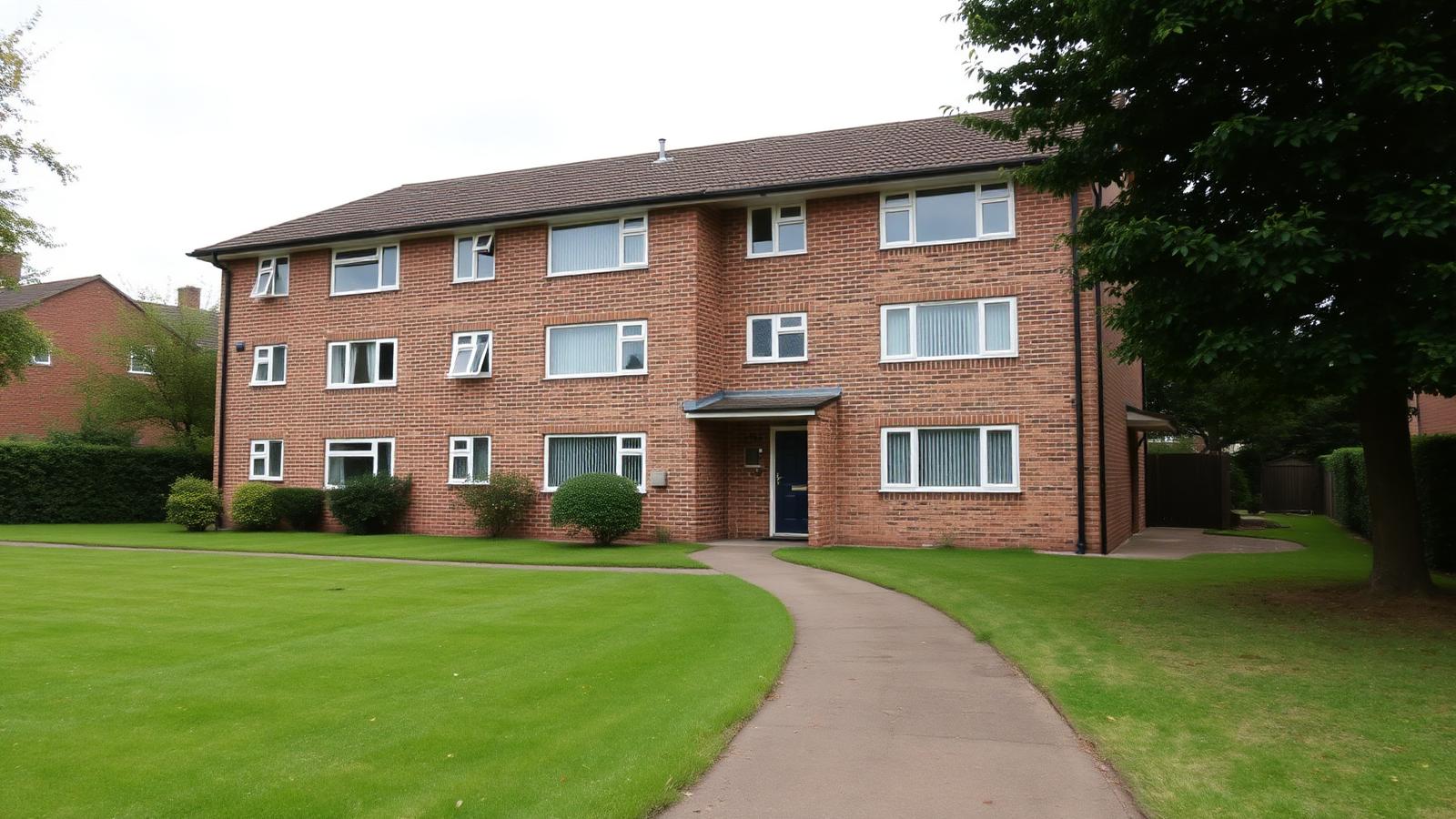
Yes, many ex-local-authority flats can be mortgaged.
However, lenders do not treat every former council flat in the same way. A low-rise brick-built flat with internal access and a healthy local resale market presents a very different lending risk from a concrete high-rise flat reached by an external deck.
The main issue is rarely the former council ownership by itself. Lenders and their valuers are more interested in the physical building, the lease, the management arrangements and whether another buyer is likely to obtain a mortgage when you eventually sell.
FG & Cook combines specialist mortgage advice with property insight from RICS-qualified chartered surveyors. This allows us to consider both parts of the problem: which lenders may accept the flat and whether its construction, condition, documentation and marketability are likely to support the mortgage.
Mortgage advice and any independently commissioned survey are separate services. A mortgage client does not automatically receive a RICS Home Survey or Building Survey unless one is separately agreed and formally instructed.
What is an ex-local-authority flat?
An ex-local-authority flat is a property that was originally built or owned by a council or another public housing body but has since passed into private ownership.
Many were purchased through Right to Buy and later sold on the open market. Others may still be owned by the local authority while neighbouring flats in the same block are privately owned.
These properties range from small flats in traditional brick-built blocks to maisonettes, deck-access estates and large post-war towers. The label “ex-local authority” therefore tells a lender very little on its own.
The key questions are how the block was constructed, how many storeys it has, whether there is a lift, how the flat is accessed, how many homes remain publicly owned, whether similar flats sell readily, what the lease contains and whether there are cladding, fire-safety or major-works concerns.
A lender that accepts one ex-council flat may decline another in the next road because the block, access or local market is different.
What about Right to Buy?
A current council tenant buying through Right to Buy is in a different position from someone purchasing an ex-local-authority flat on the open market.
The Right to Buy discount may contribute towards the transaction structure, subject to the scheme rules and lender criteria. The lender will still assess affordability, credit history, the property, the lease, construction, block height, access and marketability.
The existence of a statutory discount does not automatically make the flat acceptable security. There may also be restrictions or repayment consequences if the property is sold within certain periods, so legal advice is essential before proceeding.
Why can ex-local-authority flats be harder to mortgage?
A lender is assessing more than your income and credit history. It must also decide whether the flat provides suitable security for the mortgage.
If the loan is not repaid, the lender may eventually need to sell the property. Anything that restricts the future buyer market can therefore influence the decision.
Potential concerns include unusual construction, taller blocks, external deck access, limited private sales, no lift, short leases, high service charges, planned works, cladding, poor communal maintenance, very small floor areas and restricted future mortgage availability.
None of these automatically makes the flat unmortgageable. The lender and valuer will usually look at the overall combination of construction, condition, demand and saleability.
Does the height of the block matter?
Yes, it can make a significant difference.
Some lenders impose specific restrictions on former local-authority flats in taller blocks. Others rely more heavily on the valuer's opinion or assess the property individually.
For example, Nationwide's current intermediary criteria state that it will not accept former local-authority flats or maisonettes in blocks of more than five storeys. It also says blocks over four storeys should normally have a lift, although exceptions may sometimes be considered depending on marketability and the valuer's recommendation. This is one lender's current policy, not a rule followed by the whole market.
When considering a taller block, lenders may look at the total number of storeys, the floor of the flat, lift provision and reliability, construction, fire-safety arrangements, cladding, communal condition, service charges and recent mortgage-backed sales.
Being on a lower floor does not always solve the problem because some lender policies apply to the entire block rather than only to the position of the individual flat.

What is deck or balcony access?
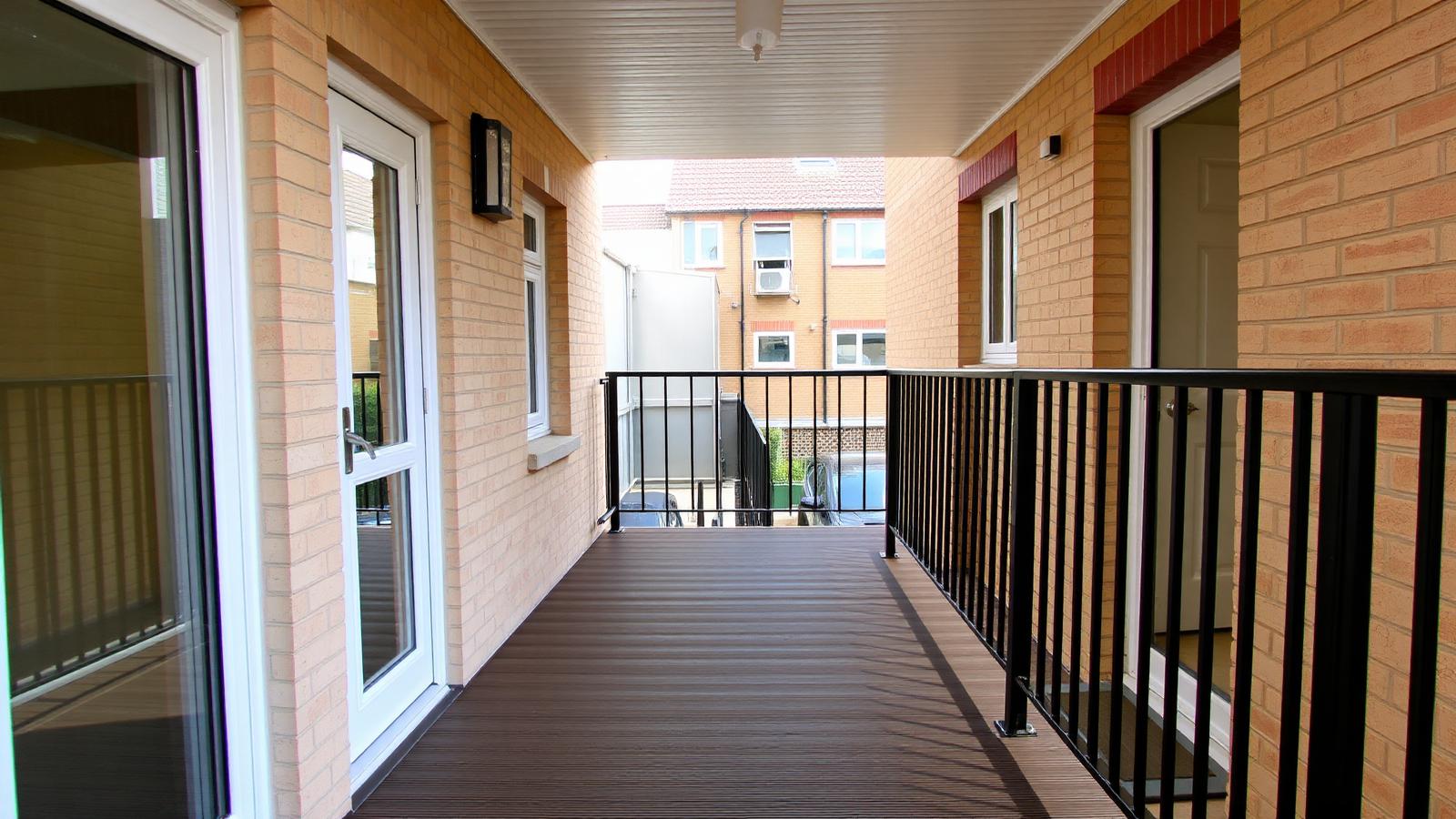
Deck access means the flat's front door is reached from an open external walkway rather than an enclosed internal corridor. This is common in some post-war council estates and maisonette developments.
Lenders may consider security, privacy, weather exposure, maintenance, the appearance of the estate and the size of the future buyer market. Deck access is not, however, an automatic decline across the market.
Mortgage availability can be stronger in parts of London and other urban areas where this housing type is familiar and there is clear evidence of demand. A well-maintained deck-access development in a popular location may therefore receive a different response from a similar-looking estate with poor communal areas and limited private sales.
This is one of the points where the valuer's local knowledge can be decisive.
Does the construction type affect the mortgage?
Often.
Some former council flats are conventionally built using brick or block. Others use precast reinforced concrete, large-panel systems, steel frames or other post-war construction methods.
The broad description “concrete block” is rarely precise enough for a lender. Different systems can have very different histories and lender outcomes.
The valuer may need to identify the exact system, whether it has known defects, whether repairs have been completed, whether certificates exist, whether alterations have affected the structure and whether reliable comparable sales are available.
This is particularly important where the estate agent describes the block only as “purpose-built” or “concrete construction”. A high-quality refurbishment inside the flat does not remove concerns about the structure of the block.
Where the construction is unusual or uncertain, the mortgage valuation may recommend further information or specialist investigation.
Does the number of privately owned flats matter?
It can.
Some lenders consider the balance between privately owned flats and those still owned or occupied by the local authority or a housing association.
A lender may be more comfortable where there is an established private resale market. A very small number of private owners can create uncertainty around comparable sales, future buyer demand, other lenders' appetite and the effect of public-sector control over management and major works.
There is no universal requirement for a fixed percentage of private ownership. Current underwriting criteria across the specialist market illustrate that deck access, small floor areas and low private ownership are all factors on which lender policies differ widely.
Do not rely solely on an estate agent's statement that “lots of people have mortgages here”. Ask for evidence of recent sales and investigate whether those transactions were mortgage funded.
What will the mortgage valuer assess?
The mortgage valuation is carried out primarily for the lender. The valuer will decide whether the flat is acceptable security and whether the proposed price is supported by the local market.
Construction and condition are part of that assessment. The valuer may comment on the roof, external walls, windows, balconies, walkways and common parts. Evidence of water penetration, concrete deterioration or poor maintenance can affect both value and mortgageability.
Height, access and lift provision are considered alongside local demand. External decks, several flights of stairs or an unreliable lift may narrow the future buyer market, but their effect depends partly on what buyers in that area routinely accept.
A practical example is a well-located London estate where several similar flats have recently sold with mortgages. That evidence may support a more confident valuation than an apparently identical block in an area where there have been few private sales.
The valuer will also consider saleability and the floor area or layout of the flat. A property may be physically sound but still be declined if the likely market is judged too restricted. There is no single minimum floor area used by every lender, so this should be checked against current criteria before applying.
What lease and service-charge issues should you check?
Most ex-local-authority flats are leasehold. The local authority or another public body may remain the freeholder and manage the building, although arrangements vary.
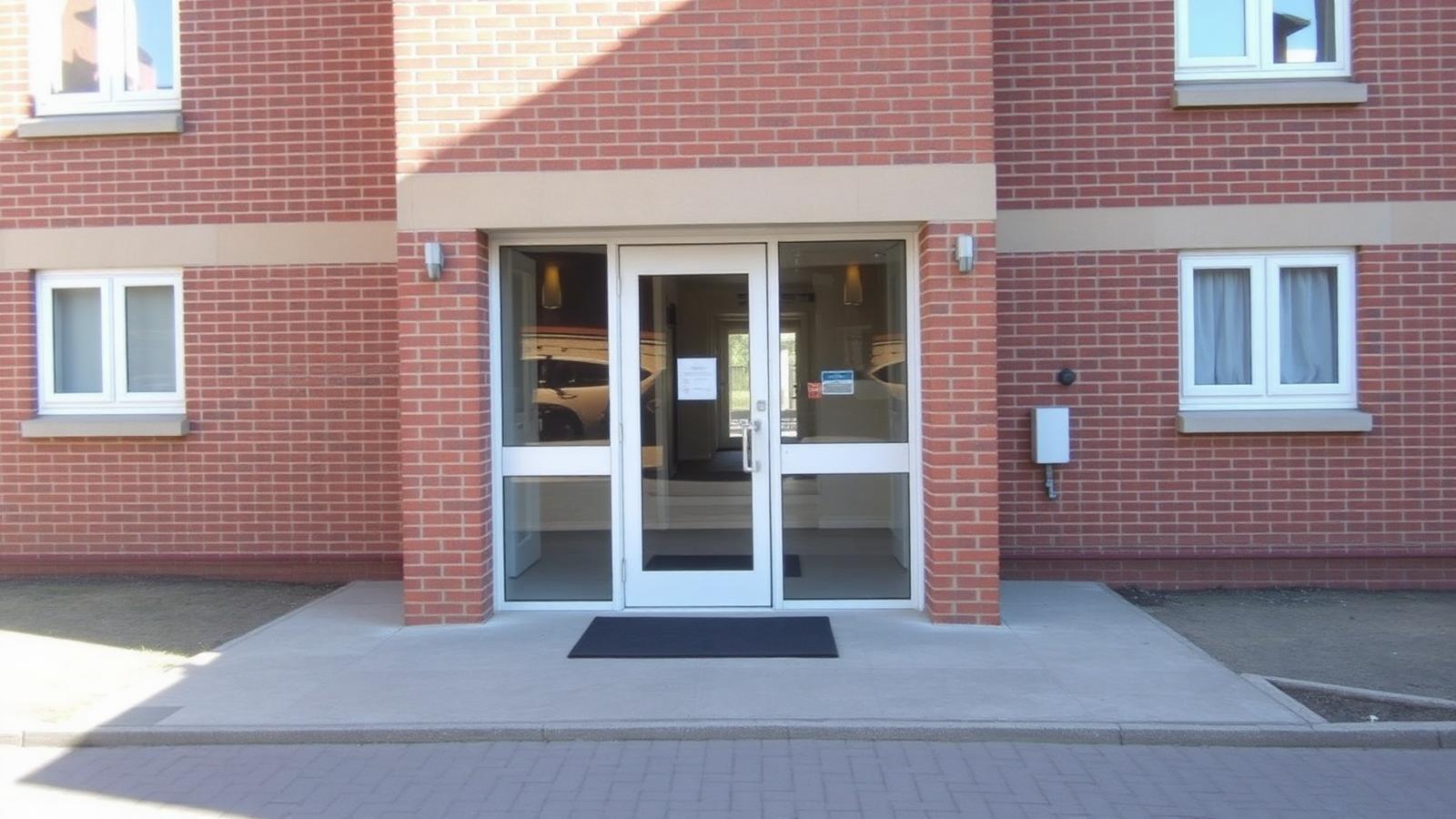
Your solicitor should review the remaining lease term, service charges, ground rent, repair obligations, buildings insurance, rights of access, alteration or subletting restrictions, communal heating, responsibility for windows and doors, estate-wide charges and any disputes or arrears.
Major works can be particularly important. A flat may appear attractively priced but still expose the buyer to substantial future contributions for roofs, lifts, windows, concrete repairs, communal heating or external refurbishment.
Ask for recent service-charge accounts, current budgets, Section 20 consultation notices, major-works estimates, details of completed and proposed works and any outstanding balances or payment plans.
The mortgage may be approved while the flat still represents a poor financial decision because of foreseeable liabilities. Mortgage advice, legal advice and surveying therefore need to inform each other, while remaining separately instructed services.
How do cladding and building-safety issues affect the mortgage?
Cladding concerns are not limited to privately developed apartment buildings. Some former local-authority blocks have external wall systems, insulation panels, balconies or other features requiring investigation.
Depending on the building, the lender or valuer may request an EWS1 form, fire-risk information, details of the external wall system, evidence of remediation, funding information or statutory certificates connected with the Building Safety Act.
An EWS1 form is not required for every block and is not a general building-safety certificate. Whether one is requested depends on the building and the valuation requirements applying at the time.
RICS published an updated secured-lending standard in May 2026 concerning when an EWS1 form should be requested, due to take effect from 1 November 2026. Lenders and valuers may update their procedures as implementation approaches.
In England, the Building Safety Act 2022 provides financial protections for qualifying leaseholders in certain buildings affected by historical safety defects. Eligibility and liability depend on the particular building, lease and ownership circumstances, so buyers should obtain building-specific legal advice rather than assuming every cost will be covered.
Will you need a larger deposit?
Possibly, but not always.
Some mainstream lenders will consider suitable ex-local-authority flats on ordinary mortgage products. Others may restrict the maximum loan-to-value, exclude taller blocks or deck-access properties, impose construction restrictions, require a physical valuation or refer the case for individual assessment.
HSBC's current intermediary criteria, for example, state a maximum loan-to-value of 80% for ex-local-authority flats. That demonstrates lender variation rather than a market-wide deposit rule.
A larger deposit may improve the range of potential options, but it cannot overcome every property problem. If a block is unacceptable because of its construction, height, cladding or saleability, reducing the mortgage may not change the decision.
What should you do before applying?
Start by identifying the block properly rather than describing the property only as “ex-council”. Establish the number of storeys, the floor of the flat, lift provision, access type, construction, approximate ownership mix, freeholder, managing agent, lease term, service charge, planned works and any cladding concerns.
Photographs of the block, entrances, decks and communal areas can help a broker understand the property before approaching lenders.
Check lender criteria before applying. The cheapest advertised rate is irrelevant if the lender will not accept the block. A broker can narrow the search by checking height, access, construction and deposit against current policies, although the final decision may still depend on valuation and underwriting.
The lease and management pack should also be reviewed early. Ask the solicitor to prioritise lease length, service-charge accounts, planned works, building-safety documentation, insurance, restrictions, disputes and any certificates required by the lender.
The mortgage valuation is not a detailed survey for you. Where the block uses unusual construction, shows deterioration or has complex repair liabilities, an appropriate survey or specialist investigation may be advisable and must be separately instructed.
Finally, visit the estate during the day and evening. Look at lighting, security, noise, lift operation, refuse areas, parking, entrances and the condition of decks or common parts. These factors influence both your experience and the eventual resale market.
What can happen at the mortgage valuation?
The lender may accept the flat without further requirements.
It may instead request more information about construction, lease terms, planned works, cladding or fire safety. It may refer the case to a senior valuer, reduce the valuation, restrict the mortgage, apply a retention or decline the flat.
If the property is declined, obtain the precise reason before applying elsewhere. A lender-policy restriction may be resolved by choosing another lender, while a serious structural, legal or saleability issue may affect several lenders.
Repeated applications made without understanding the first decision can create additional cost and delay.
Could the flat be harder to remortgage or sell?
Yes.
Finding one lender willing to finance the purchase does not guarantee that the same range of options will remain available later. Lender criteria can change, while the block itself may be affected by new major works, rising service charges, lift failure, deterioration, management changes, fire-safety findings or cladding remediation.
Before buying, consider how dependent the transaction is on one specialist lender. A flat accepted by several mainstream lenders usually presents a different future risk from one accepted only at a low loan-to-value by a small part of the specialist market.
The lower purchase price of an ex-local-authority flat can provide excellent value in the right location. It may also reflect restrictions that remain relevant when you become the seller.
Common mistakes to avoid
One mistake is assuming all ex-council flats are difficult to mortgage. Many are regularly bought and sold with mainstream finance.
The opposite assumption is equally risky. A mortgage on one flat in the estate does not prove that every lender will accept yours.
Buyers also rely too heavily on the internal condition. New flooring, decoration and fittings do not resolve concerns about construction, cladding, lift costs or a short lease.
Another mistake is ignoring planned works. A comparatively low purchase price can be overwhelmed by a substantial contribution demanded after completion.
Some buyers apply before telling the broker that the block is high-rise or deck access. The valuer will identify it, so withholding the information merely delays the issue.
Finally, do not confuse mortgage approval with confirmation that the flat is a good purchase. The lender is assessing its security, not whether the service charges, lease and future liabilities are suitable for you.
How can FG & Cook help?
Ex-local-authority flats often require more than a standard mortgage search. The broker needs to understand the property before recommending a lender, while valuation and surveying issues need to be considered alongside the mortgage criteria.
FG & Cook's specialist lending advisers can review the block height, construction, access, deposit and available lender criteria before an application is submitted.
Our RICS-qualified chartered surveyors understand how construction, condition, communal areas and local saleability can influence a valuation. Mortgage advice and any surveying instruction remain separate services, with separate scopes and terms of engagement.
This combined perspective can help distinguish between a lender-policy restriction, a construction or valuation concern, a lease or service-charge problem, missing building-safety documentation and a genuine restriction on future demand.
First-time buyers can also read about our first-time buyer mortgage service, while our wider mortgage services explain the other types of borrowing we arrange.
If you are considering an ex-local-authority flat, contact FG & Cook before applying. An early review can help avoid unsuitable lenders, unnecessary valuation costs and preventable delays.
Your home may be repossessed if you do not keep up repayments on your mortgage. Think carefully before securing other debts against your home.
FG & Cook Financial Services Limited is an appointed representative of OSL Financial Services Limited, which is authorised and regulated by the Financial Conduct Authority under Firm Reference Number 948512.
This article is intended for general information only. Lender criteria and individual property decisions vary. A mortgage valuation is undertaken primarily for the lender and is not a substitute for independent legal, surveying, fire-safety or insurance advice.