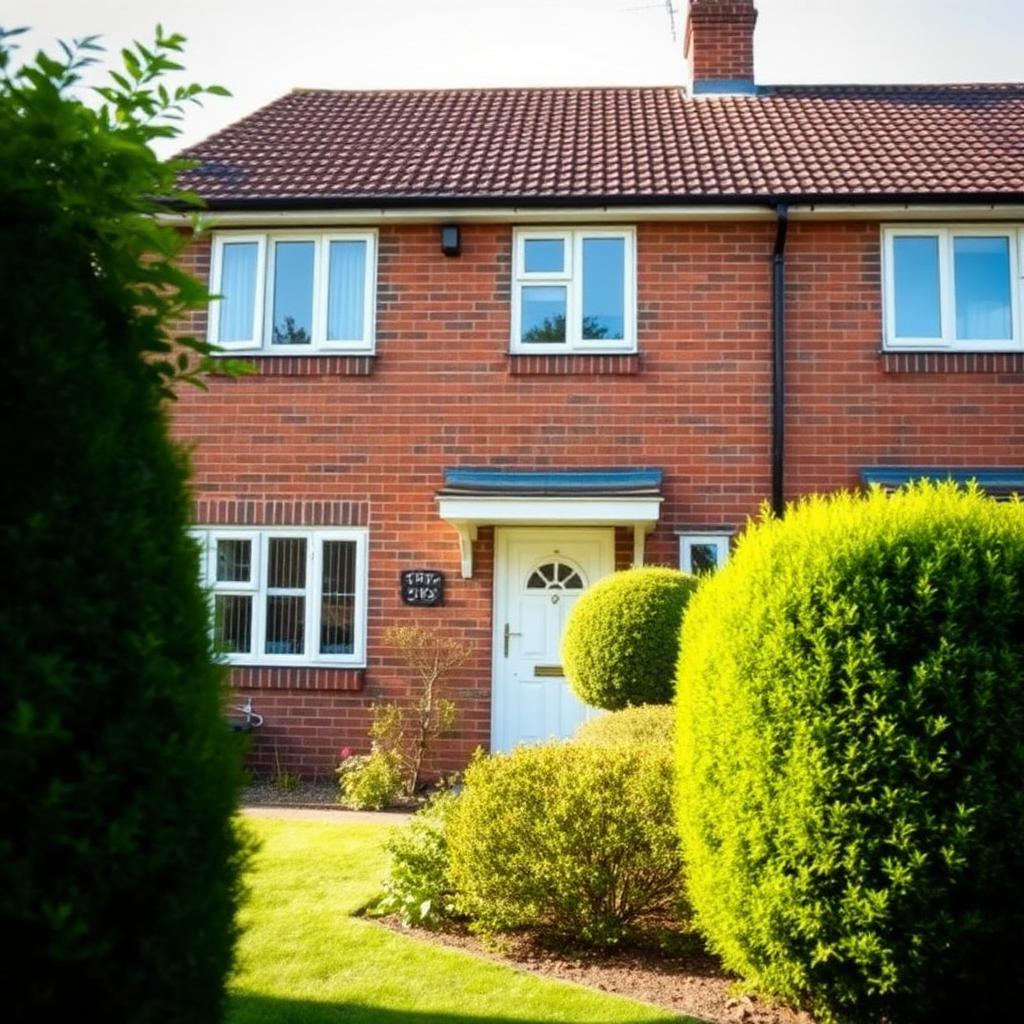
Yes, it may still be possible to obtain a mortgage where Japanese knotweed is present.
Its presence is no longer treated as an automatic mortgage refusal throughout the market. The outcome will usually depend on where it is growing, whether it is affecting buildings or usable garden space, whether it has spread from neighbouring land and whether a credible remediation strategy is in place.
RICS moved away from the old distance-led approach and now focuses more proportionately on actual damage, loss of amenity, value and saleability. Knotweed on neighbouring land is generally less likely to affect value unless the growth is extensive or has a significant effect on the subject property.
A lender may be prepared to proceed where an accredited specialist has inspected the site and produced an acceptable Japanese Knotweed Management Plan. Depending on the valuer's findings and the lender's own policy, it may also require an insurance-backed guarantee, remedial work or a mortgage retention.
The existence of a treatment plan does not guarantee acceptance, and lender approval does not prove the knotweed has been eradicated permanently.
FG & Cook's specialist lending advisers can review the valuation, specialist report, treatment arrangements and guarantee before identifying lenders whose current property criteria may fit the case.
What is Japanese knotweed?
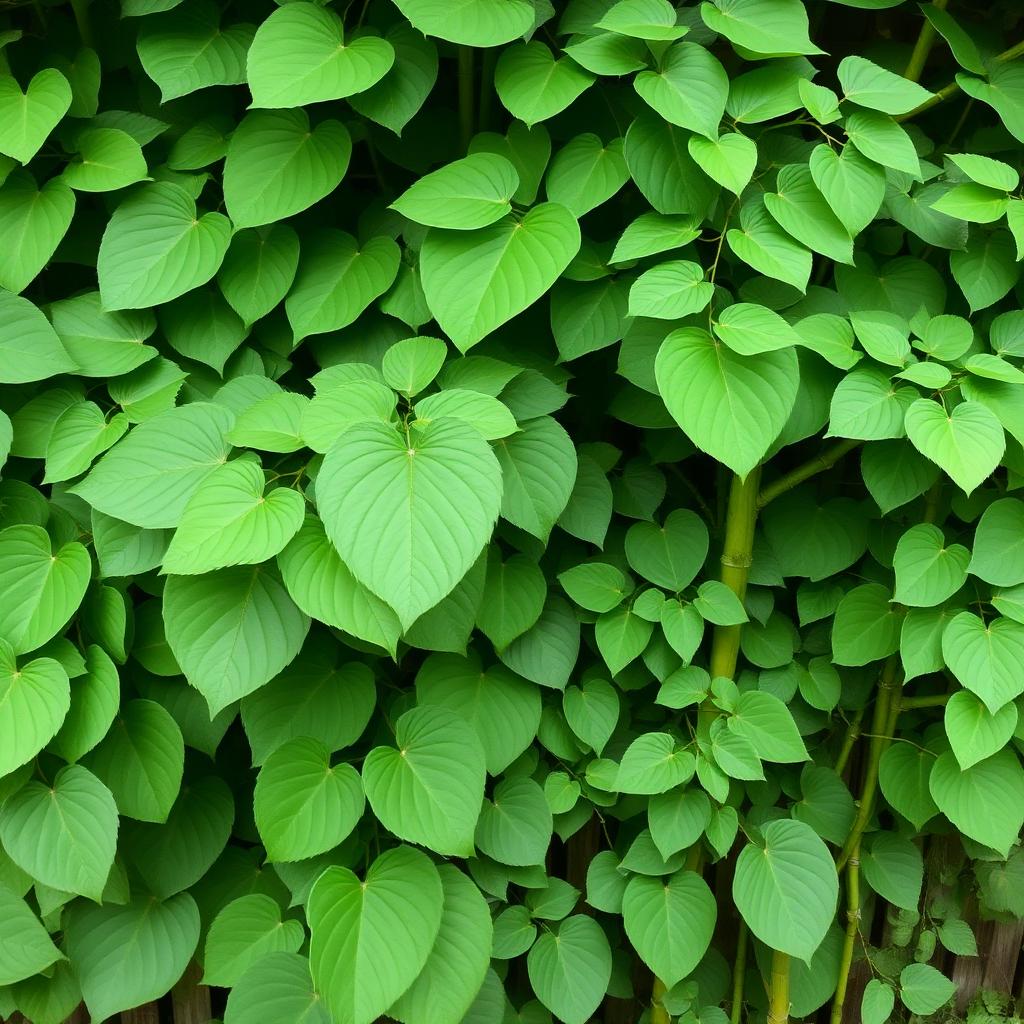
Japanese knotweed is a highly invasive non-native plant with an extensive underground rhizome system.
The visible growth dies back during winter and returns in spring, so an infestation can be difficult to identify outside the growing season. Cutting visible canes, disturbing contaminated soil or moving plant fragments can spread the plant rather than resolve the problem.
It is not illegal simply to have Japanese knotweed growing on private land. However, an owner must not allow it to spread into the wild and may face legal consequences if it encroaches onto neighbouring property. Plant material and contaminated soil may also be treated as controlled waste and must be handled appropriately.
The mortgage concern is not based solely on the plant being invasive. The lender and valuer are interested in whether it is causing damage, substantially restricting the use of the property or creating a future saleability problem.
Does Japanese knotweed automatically make a property unmortgageable?
No.
Some lenders may decline particular cases, but there is no universal market ban.
Acceptance can depend on the location and extent of the growth, whether it has caused visible damage, whether it materially affects the garden, whether it is being treated by an accredited specialist and whether the guarantee and management plan meet the lender's requirements.
Two lenders can therefore reach different decisions on the same property.
How has the RICS approach changed?
Older assessments often relied heavily on the so-called seven-metre rule.
That approach treated knotweed within seven metres of a building or boundary as a major concern. RICS later replaced it with a more proportionate framework that focuses on visible damage and the effect on the property's use and enjoyment.
This does not mean knotweed is now irrelevant. It means the valuer should assess the actual circumstances rather than applying one distance measurement as a blanket test.
The lender can still impose stricter requirements because each lender sets its own property policy.
What do the RICS management categories mean?
The current RICS approach groups cases according to their actual impact.
The most serious situations involve visible damage to a building or structure. Another category applies where the plant significantly restricts use of an amenity area, such as taking over a substantial part of a small garden.
Less serious cases may involve knotweed on the property without damage or material loss of use. Growth on neighbouring land is generally treated more proportionately unless it has a significant impact on the subject property.
The category helps the valuer explain what further action or evidence may be needed. It does not itself guarantee that a lender will approve the mortgage.
What if the knotweed is in the garden?
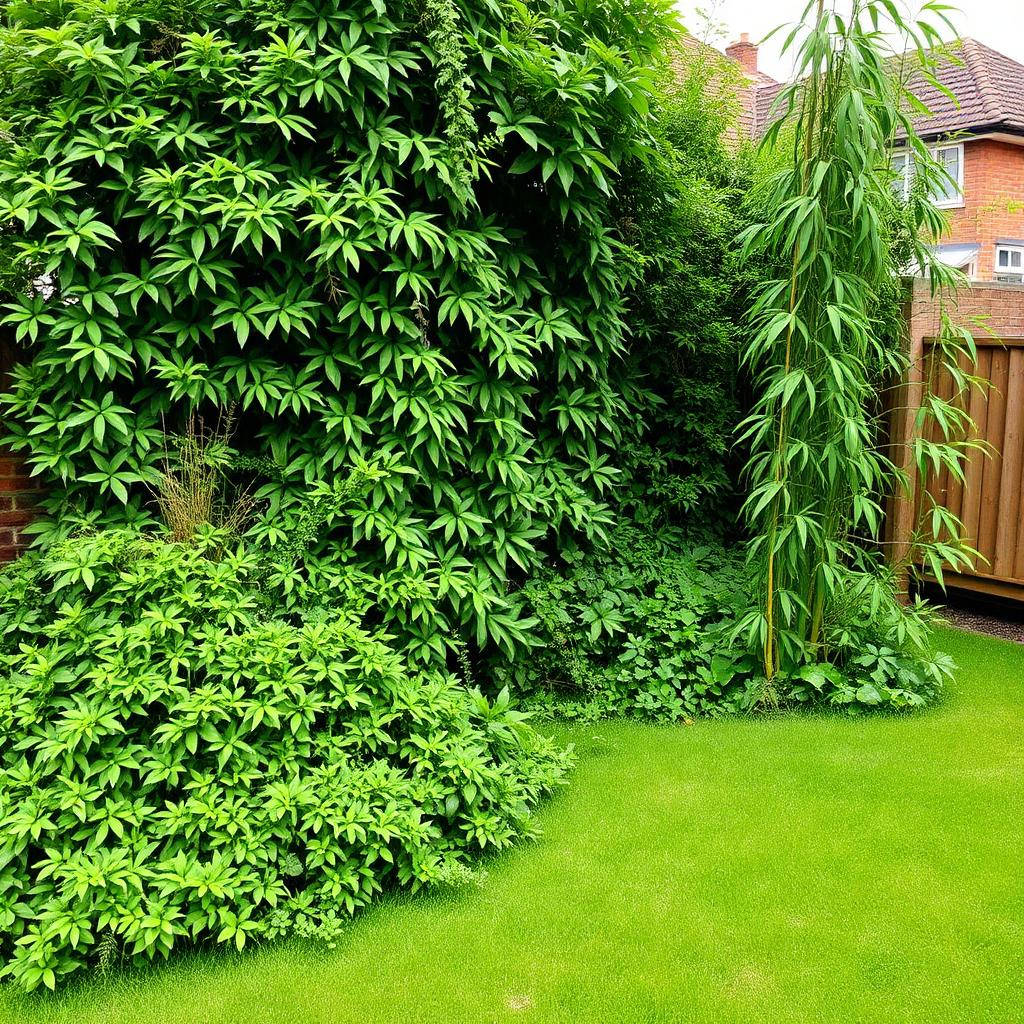
Knotweed within the property boundary may still be acceptable where it is not damaging a structure and does not significantly interfere with normal use.
A small, contained patch at the end of a large garden can present differently from an infestation occupying much of a small urban garden. The valuer may also be more concerned where the growth affects paving, retaining walls, outbuildings, drainage, planned development or landscaping.
The buyer should not rely on the seller's description that the plant is "well away from the house". The overall effect on the property still needs to be assessed.
What if the knotweed is on neighbouring land?
Neighbouring knotweed does not automatically make the property unacceptable.
The lender may still want to understand how close the growth is to the boundary, whether it has already crossed onto the property, whether the neighbour has a treatment plan and whether access will be available for monitoring or treatment.
The subject owner may have limited control over third-party land, which can make the management position more complicated. Any existing dispute, legal claim or refusal to cooperate should be disclosed to the solicitor and specialist.
Can Japanese knotweed damage buildings?
It can affect vulnerable or poorly maintained structures, but its ability to damage substantial modern buildings has often been overstated.
Knotweed is more likely to exploit existing weaknesses than to break through sound modern foundations. It may affect hard surfaces, lightweight outbuildings, retaining walls, drains or already defective construction.
The valuer should distinguish between the plant simply being present, growth affecting amenity, growth exploiting an existing defect and visible damage that requires repair.
What reports might the lender request?
The lender or valuer may request a specialist identification report, site plan, photographs, treatment history, monitoring records and details of any neighbouring infestation.
Where treatment is required, it may also ask for a Japanese Knotweed Management Plan, details of the proposed method and timescale, evidence of the contractor's accreditation and an insurance-backed guarantee that is acceptable and transferable.
RICS identifies accredited members of the Property Care Association and the Invasive Non-Native Specialists Association as recognised sources of specialist investigation and management documentation.
A quotation from a gardener or general contractor is unlikely to be enough.
What is a Japanese Knotweed Management Plan?
A Japanese Knotweed Management Plan explains how the infestation will be treated, monitored and controlled.
A suitable plan will normally identify the affected area, treatment method, likely timescale, monitoring arrangements, measures to prevent spread, access requirements and what happens if regrowth occurs.
Treatment can take several growing seasons. Chemical treatment is often gradual, while excavation can be faster but more disruptive and expensive.
The lender will want to know not only that treatment has started, but that the plan is credible, properly funded and capable of continuing after ownership changes.
Does treatment have to be completed before the mortgage proceeds?
Not always.
Some lenders may accept a property while a recognised treatment programme is under way. Others may require treatment to start before completion or insist on completed remediation and reinspection in a more serious case.
The required stage depends on the valuer's recommendation, the severity of the infestation and the lender's instructions.
A treatment plan does not create a guaranteed mortgage route.
Is an insurance-backed guarantee required?
Many lenders expect an appropriate guarantee where a treatment plan is in place.
The lender may check how long it lasts, whether it is genuinely insurance backed, whether it remains effective if the contractor stops trading, whether it transfers to a new owner and what it actually covers.
An insurance-backed guarantee is useful protection, but it does not prove the plant has been eradicated permanently or that every future loss is covered.
Standard buildings insurance may also exclude or restrict cover for damage associated with Japanese knotweed or invasive roots. Buyers should therefore check the actual policy wording rather than assuming ordinary home insurance will meet the risk.
Can the lender impose a mortgage retention?
Potentially.
A retention means the lender withholds part of the mortgage advance until specified treatment, documentation or reinspection has been completed.
For example, if a buyer agrees to pay £300,000 but the lender initially releases only £285,000, the buyer must find the £15,000 shortfall needed to complete as well as funding any treatment costs.
The retained amount is not always released automatically. The lender may require invoices, updated reports and a satisfactory reinspection.
A buyer must understand the amount, release conditions and likely timescale before exchanging contracts.
Does Japanese knotweed reduce the property's value?
It can.
The effect depends on the severity of the infestation, treatment status, guarantee, physical impact and effect on buyer confidence.
Which? has reported research suggesting that affected homes sold for around 5% less on average. That is a broad research finding, not a rule that should be deducted mechanically from every property.
One property may suffer little lasting effect after successful treatment with transferable documentation. Another may attract a larger discount because the infestation affects a small garden, originates from uncontrolled neighbouring land, has caused damage or restricts lender choice.
The valuer should assess the individual property and relevant local evidence.
Can a property receive a £0 mortgage valuation?
Yes, but that does not mean it has no open-market value.
A nil mortgage valuation may mean the valuer cannot currently recommend the property as acceptable security because specialist investigation is required, the extent is unclear, no recognised plan exists, the guarantee is unacceptable or the lender's policy excludes the case.
A different outcome may be possible after further evidence, treatment or consideration by another lender.
The figure is a mortgage-security decision, not a statement that the land and building are literally worthless.
What should a buyer check before exchanging contracts?
Do not exchange while the knotweed position, mortgage conditions or treatment funding remain uncertain.
The buyer should obtain the specialist report, management plan, site plan, treatment history, contractor details, guarantee and insurance documents. The solicitor should review the seller's Property Information Form and raise enquiries about present or previous knotweed, neighbouring infestations, disputes, treatment access and continuing obligations.
The buyer also needs to understand whether the mortgage offer contains a retention or special condition, who will pay for future treatment and whether planned building or landscaping work could disturb contaminated soil.
A lender's decision to lend does not mean the plant has been eradicated, the purchase price is sensible or the future resale risk is acceptable.
First-time buyers can review FG & Cook's first-time buyer mortgage service before committing to an affected property.
What if treatment was completed several years ago?
Historic treatment can be reassuring where the documentation is complete and monitoring shows no recurrence.
The lender or valuer may want the original report, management plan, treatment and monitoring records, completion or status report, remaining guarantee period and evidence that the guarantee transfers.
The absence of visible growth at the valuation is not proof of eradication. Seasonal dieback, recent cutting or chemical treatment can temporarily remove visible evidence while the rhizome system remains viable.
What should an existing owner do before remortgaging?
Collect the documentation before submitting applications.
A new lender may scrutinise the property more closely than the existing lender, particularly if the infestation was found after the original mortgage completed.
The homeowner should locate the identification report, treatment plan, invoices, monitoring records, guarantee, insurance documents and any correspondence about neighbouring land.
The existing lender may offer a product transfer without a new physical valuation, whereas a remortgage to another lender is more likely to trigger a fresh review.
FG & Cook's specialist lending service may be relevant where the property does not fit standard lender requirements.
Can specialist lenders accept Japanese knotweed?
Some specialist or manually underwritten lenders may consider cases outside automated high-street criteria.
That does not mean there is a guaranteed "Japanese knotweed mortgage".
A specialist lender may still require a satisfactory valuation, a recognised report, an acceptable management plan, a suitable guarantee, treatment to have started or finished, a retention or a lower loan-to-value.
The available lender range may be smaller, and the rate or fees may be higher.
Repeated applications will not solve an unresolved property issue identified by each valuer.
Common mistakes we frequently see
One common mistake is assuming that any knotweed within seven metres of a building makes the property automatically unmortgageable. That is no longer the RICS assessment approach.
Another is assuming neighbouring knotweed is irrelevant simply because it lies outside the legal boundary.
Buyers may also mistake a treatment quotation for a complete management plan or accept a contractor's guarantee without checking whether it is genuinely insurance backed and transferable.
A further mistake is cutting, excavating or disposing of the plant without specialist advice, potentially spreading contaminated material and creating additional legal or remediation problems.
Perhaps the most serious mistake is exchanging contracts while the mortgage offer remains subject to a specialist report, retention or acceptable treatment documentation.
How can FG & Cook help?
Japanese knotweed cases sit at the point where mortgage criteria, valuation, surveying, remediation and legal risk overlap.
FG & Cook's specialist lending advisers can review the mortgage purpose, valuer's comments, location and extent of the knotweed, specialist report, management plan, guarantee, proposed treatment, retention and current lender criteria.
FG & Cook's directors include RICS-qualified surveyors, which can help the firm understand the valuation and marketability issues affecting a lending decision.
Mortgage advice does not replace specialist knotweed, surveying, environmental or legal advice. The aim is to coordinate the evidence and identify lenders whose property policy may fit the case.
You can also explore FG & Cook's wider mortgage services or contact an adviser before making an offer, exchanging contracts or submitting an application.